
Metal Roof and Salt Air: Corrosion and Best Materials
Metal roof salt air corrosion explained: where it starts, which metals and coatings suit coastal homes, and what to ask. Call (813) 497-4428.

Adrian Coastal Roofing

Metal roof salt air corrosion is real, but it is manageable. Salt carried on coastal wind settles on metal, and chlorides can attack the coating or the metal underneath, most often at cut edges, scratches, fasteners and places where two different metals touch. No metal roof is corrosion-proof, and the right material, finish and fastener choice depends on how close your home sits to salt water.
This guide explains where corrosion starts, how aluminum, coated steel and copper compare as general material types, and what to ask before you buy. It is general information, not a quote, and each section names its sources. For the full picture, see our metal roofing guide for Tampa Bay and the pros and cons of a metal roof in Florida.
Does Salt Air Corrode Metal Roofs? The Honest Answer
Yes, salt air can corrode a metal roof, and how much depends on the metal, the finish and the details. Metal Alliance, a Florida metal supplier, says salt carried through the air can settle on roof surfaces, humidity keeps metal wet longer, and wind can drive salt into seams, laps, trim and fastener locations.
A well-chosen, well-installed system can do well near the water, while a mismatched one can fail early at its weakest detail. Nothing here promises how long a roof will last. Your distance from the water, the panel system and the installation all matter, so compare options against your own address.
Metal Roof Salt Air Corrosion: Where It Starts
Metal roof salt air corrosion usually starts where the protective layer is broken or thin, not across a healthy panel. Metal Alliance says chloride exposure can accelerate corrosion on coated steel when the coating system is compromised, particularly at cut edges, formed areas or where conditions exceed what the product was made for. Scratches from handling or foot traffic can open the same door.
Seawater is also a stronger electrolyte than rainwater. NRCA's Professional Roofing magazine explains that seawater is more conductive, and therefore more corrosive, because it carries far more dissolved salt ions. That is why cut edges, scratches and fastener points deserve extra attention in a coastal design.
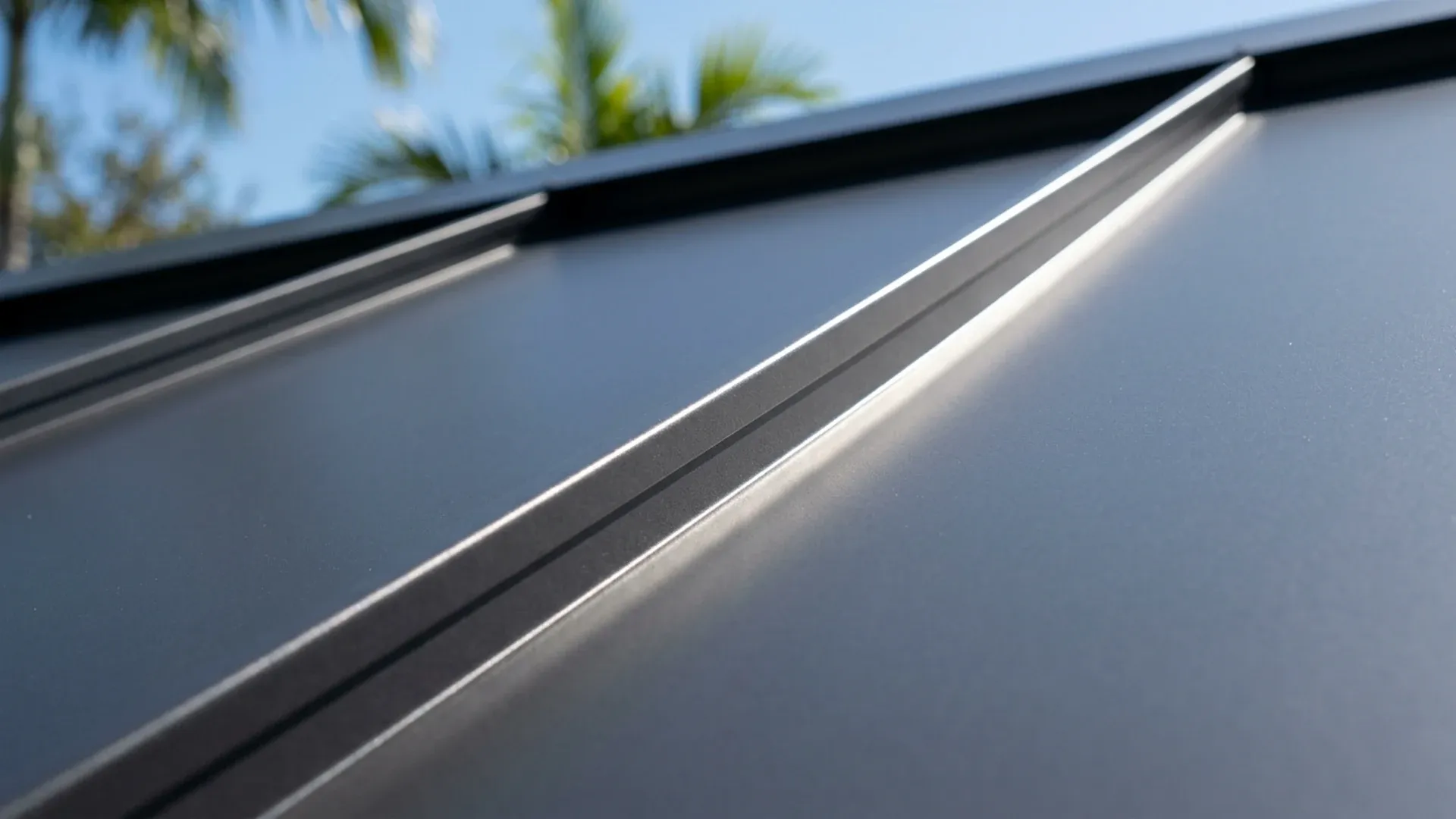
Galvanic Corrosion: When Two Different Metals Touch
Galvanic corrosion is accelerated corrosion that happens when two different metals are joined by moisture. The ATAS International technical bulletin says one metal then corrodes faster than it would alone, and that chlorides in seawater are strong electrolytes. Its classic example is a zinc-coated nail in an aluminum roof: the small nail head is depleted quickly and begins to red rust, while an aluminum nail in a galvanized roof poses no problem.
Direct contact is not required. The same bulletin warns that runoff from copper roofs, copper plumbing or copper-containing HVAC equipment can corrode coated steel, and that air conditioner condensate can be a stronger electrolyte than rain. NRCA also tells designers to weigh runoff from incompatible metals.
Best Metal Roof for Coastal Areas: Which Materials Hold Up
No single metal is best for every coastal home, so read these as general types, not a recommendation for your roof. The Metal Roofing Alliance says aluminum is lighter than steel, offers increased corrosion resistance and suits homes in marine and coastal environments. It also lists copper and zinc as natural metals with high corrosion resistance that form a protective patina.
Coated steel, such as Galvalume, depends on its metallic coating. Metal Alliance says a standard painted Galvalume system may suit inland or moderate sites but may not suit severe marine exposure, while aluminum is often chosen when salt exposure is unavoidable. ArcelorMittal says galvanized steel is not recommended near seawater without extra zinc coating or paint, because chlorides accelerate corrosion. For how metal stacks up against shingles, see our metal roof vs shingles comparison.
Coatings and Finishes: What to Ask About
A finish is a layer of protection against metal roof salt air corrosion, not a guarantee. Metal Alliance notes that PVDF coatings are commonly used where color stability and UV resistance matter, and that scratches, moisture or contamination before fabrication can compromise coating performance. It describes a coastal roof as a complete assembly, not a collection of separate parts.
The Florida code also addresses corrosion. Section 1507.4.3 of the 2023 Florida Building Code, Building says metal-sheet roof coverings must be naturally corrosion resistant or provided with corrosion resistance under Table 1507.4.3(2), titled Minimum Corrosion Resistance. Ask the manufacturer which coating suits your distance from the water and how cut edges are treated.
Metal Roof Fasteners, Clips and Trim: Small Parts, Big Weak Points
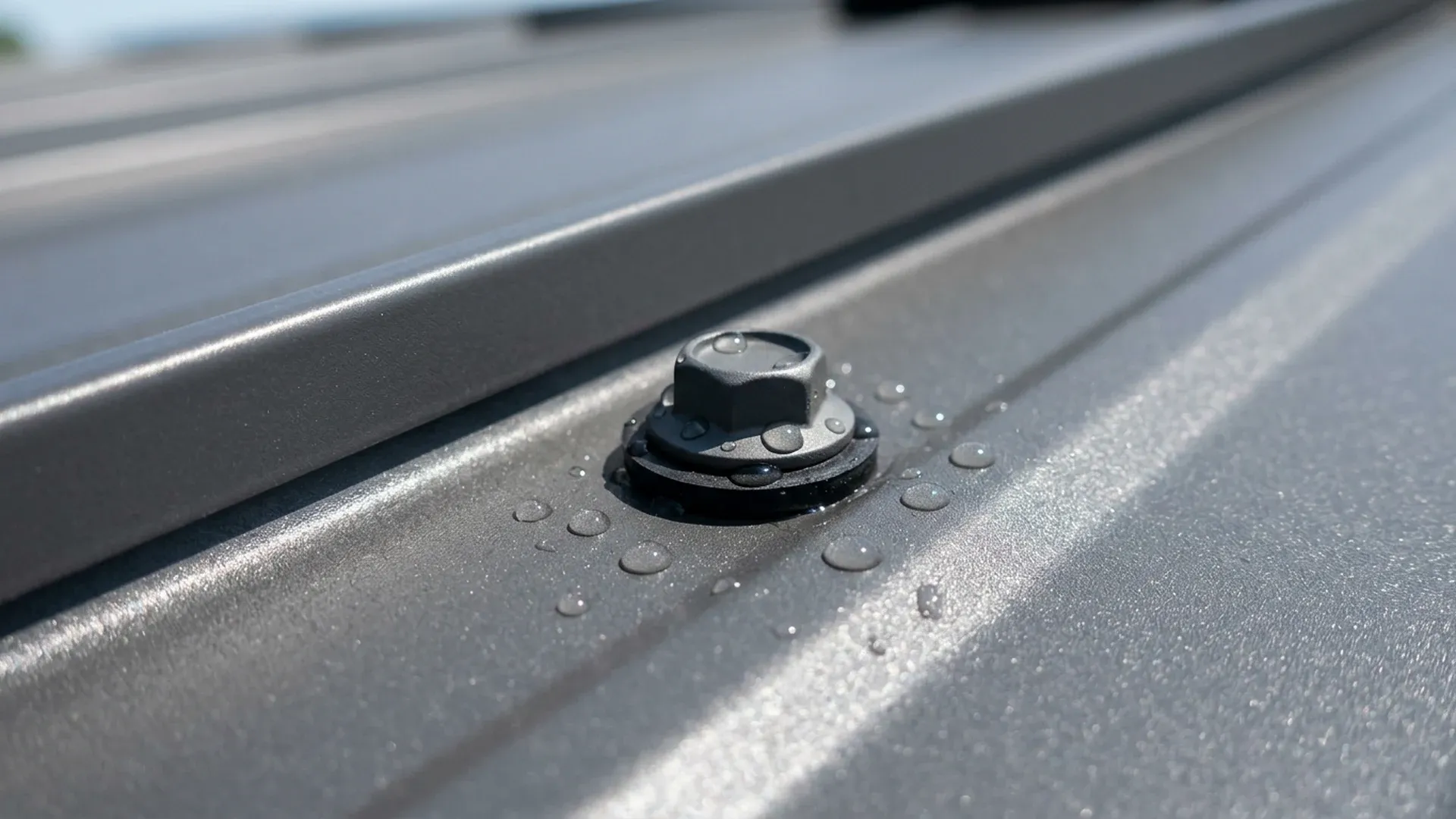
Fasteners and trim are small, yet they are often where a coastal roof shows trouble first. Section 1507.4.4 of the same code says metal roof panels are secured with the approved manufacturer's fasteners. Without manufacturer recommendations, it calls for galvanized fasteners on steel roofs, accepts stainless steel on all types of metal roofs, and accepts aluminum fasteners on aluminum roofs attached to aluminum supports.
The ATAS bulletin adds that where stainless steel is used in marine settings, 316L is a minimum requirement, and that pencil graphite is extremely corrosive to aluminum. Ask which fastener, clip, washer and trim metals the panel maker approves. Our post on standing seam vs exposed fastener roofs shows where fasteners sit.
Corrosion Checks Between Professional Visits
You can watch for early signs of metal roof salt air corrosion from the ground or a window. Stay off the roof, and never climb a wet one. Look for:
- Black, white or red-brown staining near screws, trim edges and panel ends.
- Bubbling or lifting paint around fasteners.
- Streaks below rooftop equipment, pipes or air conditioner drains.
- Debris or damage that traps moisture against the metal.
The ATAS bulletin describes black or white stains followed by red rust as a sign of damage from strong alkalis, and it advises against strong alkaline cleaners and wet mortar contact. Take dated photos after storms. A pro can check details up close, and our metal roof repair in Clearwater post shows what repairs involve.
Questions to Ask Before Choosing a Metal Roof Near Water
Bring these to every bid to compare how each roofer handles metal roof salt air corrosion:
- Which metal and coating system is proposed, and what does the manufacturer say about distance from salt water?
- How are cut edges, field-cut trim and scratches handled?
- Which fasteners, clips, washers and flashing metals are approved with this panel?
- Will copper lines, treated lumber, masonry or equipment condensate touch or drain onto the roof?
- What does the written warranty cover in coastal exposure, and what can void it?
For wind questions, read our guide to metal roof hurricane wind ratings. For a local view of the decision, see metal roofing in Brandon.
Metal Roof Salt Air Corrosion FAQ
Do metal roofs rust near the ocean?
Some can. Coated steel can rust where the coating is cut, scratched or worn, and chlorides speed that up, according to Metal Alliance. Aluminum forms a protective oxide layer, so it behaves differently. No metal roof is corrosion-proof, so ask about the coating, the edges and the fasteners before you decide.
Galvalume vs Aluminum for Salt Air: Which Is Better?
Neither wins everywhere. Metal Alliance says aluminum is often chosen when salt exposure is unavoidable, while standard painted Galvalume may suit inland or moderate sites. Distance from the water, the finish and the details all matter, so ask the manufacturer what fits your address.
Can you mix metals on a coastal roof?
Sometimes, but only with care. Contact or runoff between different metals can speed corrosion, as the ATAS bulletin explains, and a small fastener against a large panel of another metal is the pairing to avoid. Ask which combinations the manufacturer approves, and keep copper, treated lumber and condensate runoff away.
Talk to Coastal Roofing Group About Your Metal Roof
If your home sits near the Gulf or Tampa Bay and you worry about metal roof salt air corrosion, start with the questions above. Coastal Roofing Group is licensed and insured, family-owned since 1993, and backs its work with a written workmanship warranty and qualifying manufacturer material warranty. Call (813) 497-4428 to ask about metal roofing in Florida or metal roof installation, or book a roof inspection to have an existing metal roof checked.
About Adrian Coastal Roofing
Adrian is the CEO of Coastal Roofing, a company specializing in roof installation in Florida, recognized for its quality, reliability, and excellence in residential and commercial projects. With years of experience in the construction industry and Florida roofing, Adrian has built his reputation by delivering durable solutions that withstand the state’s extreme weather. Under his leadership, Coastal Roofing has become a leader in roof installation in Florida, offering modern systems such as TPO, PVC, metal roofing, and other efficient solutions to reduce costs and extend the lifespan of roofs.


