
How to Find a Roof Leak: Common Sources in Florida Homes
Learn how to find a roof leak in Florida: safe checks from the ground and attic, common sources and when to call a pro. Call (813) 497-4428.

Adrian Coastal Roofing

How to find a roof leak starts with a simple idea: water leaves clues, and you can follow them backward from the ceiling to the roof. Florida rain, humidity and UV wear down the same weak spots again and again, so most leaks begin in a short list of places. Learning that list saves time, and it keeps you off a roof that is not safe to walk.
This guide shows how to find a roof leak from the ground and from the attic, which parts of a Florida roof fail first, and when to stop and call a licensed roofer. Rules and conditions vary by home, so use it as a checklist, not a diagnosis. For the full picture of repairs, see our roof repair services in Tampa Bay guide.
Safety First: How to Find a Roof Leak Without Climbing
Safety comes before any search, because the roof is the most dangerous place to look. A wet roof is slick, and algae, loose granules and steep pitch make a fall easy. OSHA says falls are among the most common causes of serious work-related injuries and deaths, and its fall protection page notes that construction employers must provide protection at six feet. Homeowners get no harness or training.
So keep the search on the ground and in the attic. Never go up during rain, wind or lightning, and stay far from power lines. A photo from the ground with a zoom lens often shows enough.
How to Find a Roof Leak From the Ground
Start outside, with binoculars or a phone camera zoomed in, and walk the whole house before you touch anything. Compare each slope with the others and look for anything that breaks the pattern. These signs point to a likely entry point:
- Missing, cracked, curled or lifted shingles, and bare patches where granules have worn away.
- Exposed nail heads or flashing that has pulled loose.
- Sagging lines or ponding water on a flat or low section.
- Debris piled in a valley, at a skylight or behind a chimney.
- Granules collecting at a downspout outlet.
- Stained fascia, soffit or siding right under the eave.
Photograph every suspect area with the date. Photos help a roofer, and they help you compare after the next storm.
How to Find a Roof Leak From the Attic: Trace the Water Back
The attic is where most homeowners can find a roof leak safely, and the best time is during daylight, shortly after rain. Bring a bright flashlight, and step only on framing, never on bare drywall. Look at the underside of the roof deck first, then follow any stain to its highest point, because water runs along the wood before it drops.
Check for dark rings on the plywood, rusty nail tips, wet insulation, daylight where it should not appear and a musty smell. Then measure from a fixed reference, such as a plumbing vent pipe or a gable wall, and mark the spot with chalk. That measurement lets you match the attic stain to a place outside. If you also see a ceiling stain, our guide to ceiling water stains explains how to tell a roof leak from condensation or plumbing.
Roof Vent Boot Leaks and Other Penetration Problems
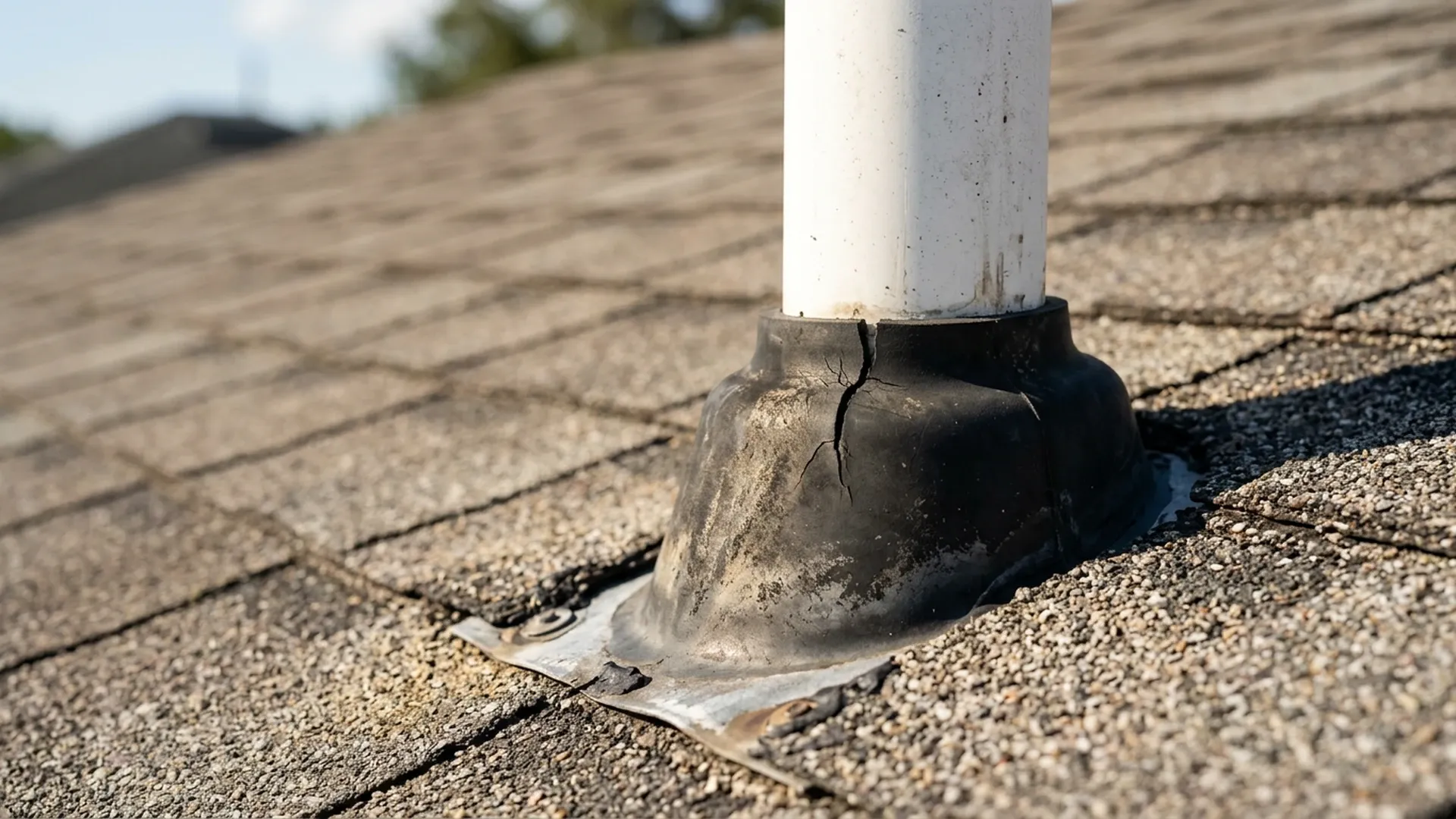
Every pipe, vent and exhaust fan that passes through the roof is a hole that has to be sealed. A roof vent boot leak is common because the rubber collar around a plumbing vent can dry out and crack under Florida sun and heat.
Look for a vent pipe with a dry, cracked or gapped collar, exposed fasteners, or a bead of old sealant that has pulled away. Inside the attic, check the wood around that pipe for a rusty ring or a dripping trail. Bathroom fans, attic vents and satellite or solar mounts deserve the same look. If a metal roof is involved, exposed fasteners and seams are the usual suspects, as we explain in our metal roof repair article.
Roof Flashing Leaks, Valleys and Skylights
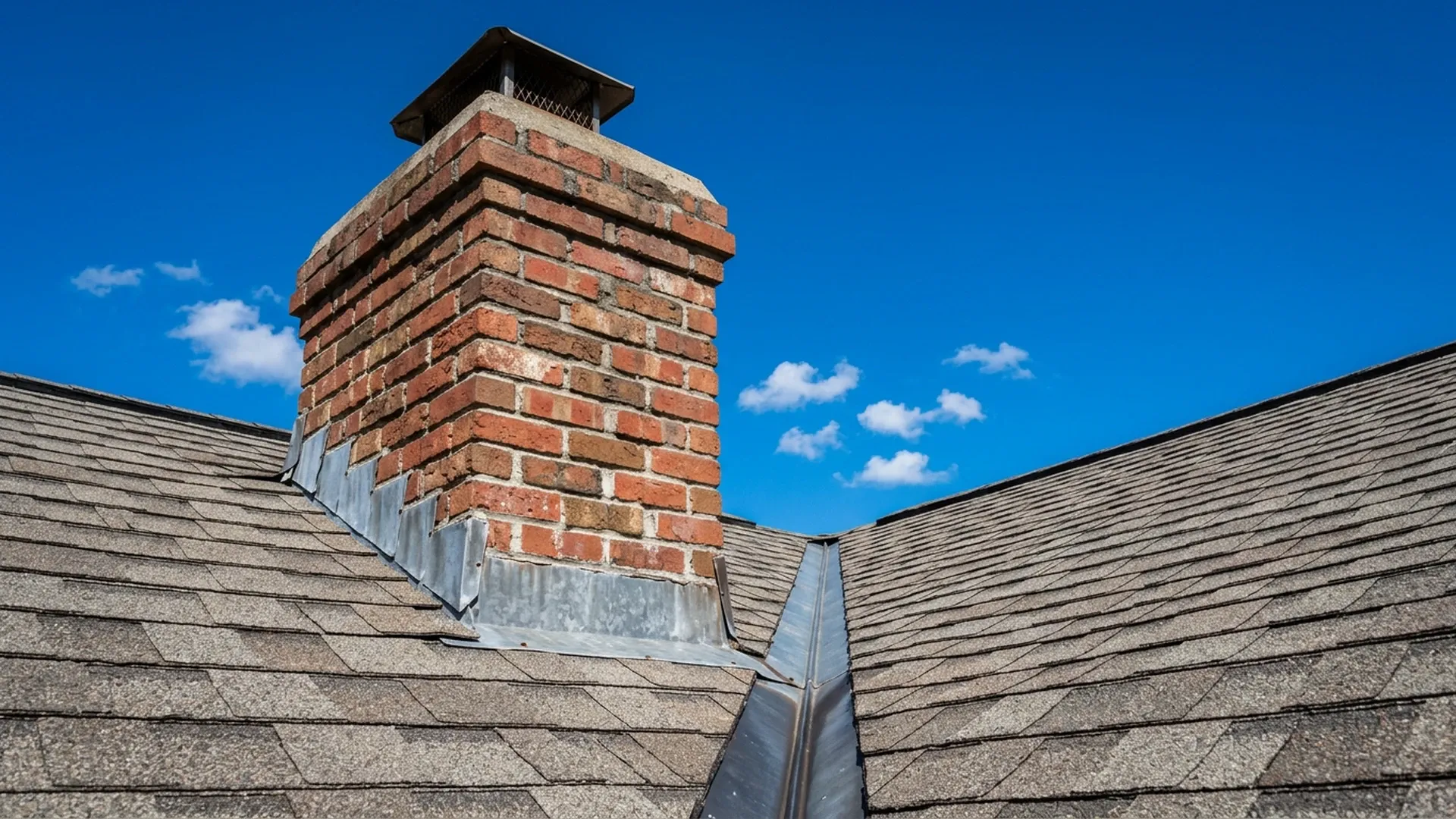
A roof flashing leak is one of the most frequent causes of water entry, because flashing sits where two surfaces meet and water is pushed against the joint. The 2023 Florida Building Code, Residential, says in Section R903.2 that flashing must be installed at wall and roof intersections, wherever the roof changes slope or direction, and around roof openings. That list is also a map of where to look.
Check chimneys, side walls, dormers, skylights and valleys, where two slopes meet and carry the most water. Rust, gaps, lifted edges and dried sealant are the warning signs. Caulk over a bad joint is usually only a temporary patch, so read our guide to roof flashing repair in Central Florida before you decide what to do.
Shingles, Ridge and Eaves: Other Roof Leak Sources in Florida
Not every leak comes from metal parts. Shingles take the brunt of sun, wind-driven rain and flying debris, and a few damaged ones are enough to let water reach the underlayment. Look for missing tabs after a storm, creased shingles, and rows that have lifted at the edges.
Two more roof leak sources in Florida are easy to miss. One is the ridge line, where caps or ridge vents can loosen in strong wind. The other is the eave, where a backed-up or sagging gutter can push water under the first course of shingles and into the fascia and soffit. Stains under the eave often point there.
Where Is My Roof Leaking From? Read the Evidence
Water rarely drops straight down from the hole, so the stain inside is usually not under the leak. It can move along a rafter or the underside of the deck for several feet, and wind-driven rain can enter on only one side of the house. Match the timing to the weather to narrow it down.
- A stain that grows during or right after rain points to the roof.
- A stain that appears on a dry, humid day may be condensation or a plumbing or air conditioner line.
- A leak that shows up only when wind blows from one direction suggests flashing or a side wall.
- A stain with no rain connection at all deserves a plumber first.
Running a hose over the roof to test it can push water into the house, so we do not recommend it as a DIY step in how to find a roof leak.
When to Stop Looking and Call a Roofer
Stop when learning how to find a roof leak would need a ladder on a wet roof, or when you find soft or sagging decking, wet insulation in several places, or a leak you cannot trace after one careful pass. Water running into light fixtures is an emergency, so turn off the power to that area if it is safe to do so.
Meanwhile, contain the water with buckets and move belongings. Our guides on temporary roof repair and emergency roof tarping cover short-term steps. Your photos and measurements will help the roofer trace the source faster. Check your own homeowners policy about reporting damage, because coverage varies.
How to Find a Roof Leak FAQ
Can I find a roof leak without going on the roof?
Yes, often. Check the attic in daylight after rain for stains, wet insulation and daylight gaps, then scan the roof from the ground with binoculars. Together these steps usually narrow a leak to a slope or a feature, and they keep you off a wet, steep surface.
Why is my ceiling stain not under the roof leak?
Water follows rafters, trusses and the roof deck before it drops, so the stain can sit several feet from the entry point. Wind-driven rain can also enter on one side only. That is why tracing from the attic and measuring from a fixed point matters.
How long does it take to find a roof leak?
It depends on the roof and the weather. A clear attic stain can lead to the source within a visit, while a slow leak may need dry and wet days to confirm. Do not wait for it to get worse, because repeated wetting can damage decking and insulation.
Request a Roof Leak Inspection in Tampa Bay
If you have followed the steps on how to find a roof leak and still need an answer, Coastal Roofing Group can take it from here. We are licensed and insured, and our work comes with a written workmanship warranty and qualifying manufacturer material warranty. Call us at (813) 497-4428 to schedule a roof inspection, or learn more about our roof repair and emergency roof repair services.
About Adrian Coastal Roofing
Adrian is the CEO of Coastal Roofing, a company specializing in roof installation in Florida, recognized for its quality, reliability, and excellence in residential and commercial projects. With years of experience in the construction industry and Florida roofing, Adrian has built his reputation by delivering durable solutions that withstand the state’s extreme weather. Under his leadership, Coastal Roofing has become a leader in roof installation in Florida, offering modern systems such as TPO, PVC, metal roofing, and other efficient solutions to reduce costs and extend the lifespan of roofs.


