
Emergency Roof Tarping After a Storm: Do's and Don'ts
Emergency roof tarping after a Florida storm: what a professional tarp does, what to avoid, and how to document damage. Call (813) 497-4428.

Adrian Coastal Roofing

Emergency roof tarping is a temporary waterproof cover installed over storm damage to keep rain out of your home until a permanent repair can be done. It protects the attic, insulation, and ceilings, but it is a stopgap, not a repair. Done wrong, or done on a wet roof, a tarp can cost you more than it saves.
This guide explains how emergency roof tarping works, what to do first, what to avoid, and how long a tarp can realistically stay up in Tampa Bay weather.
What Is Emergency Roof Tarping and When Do You Need It?
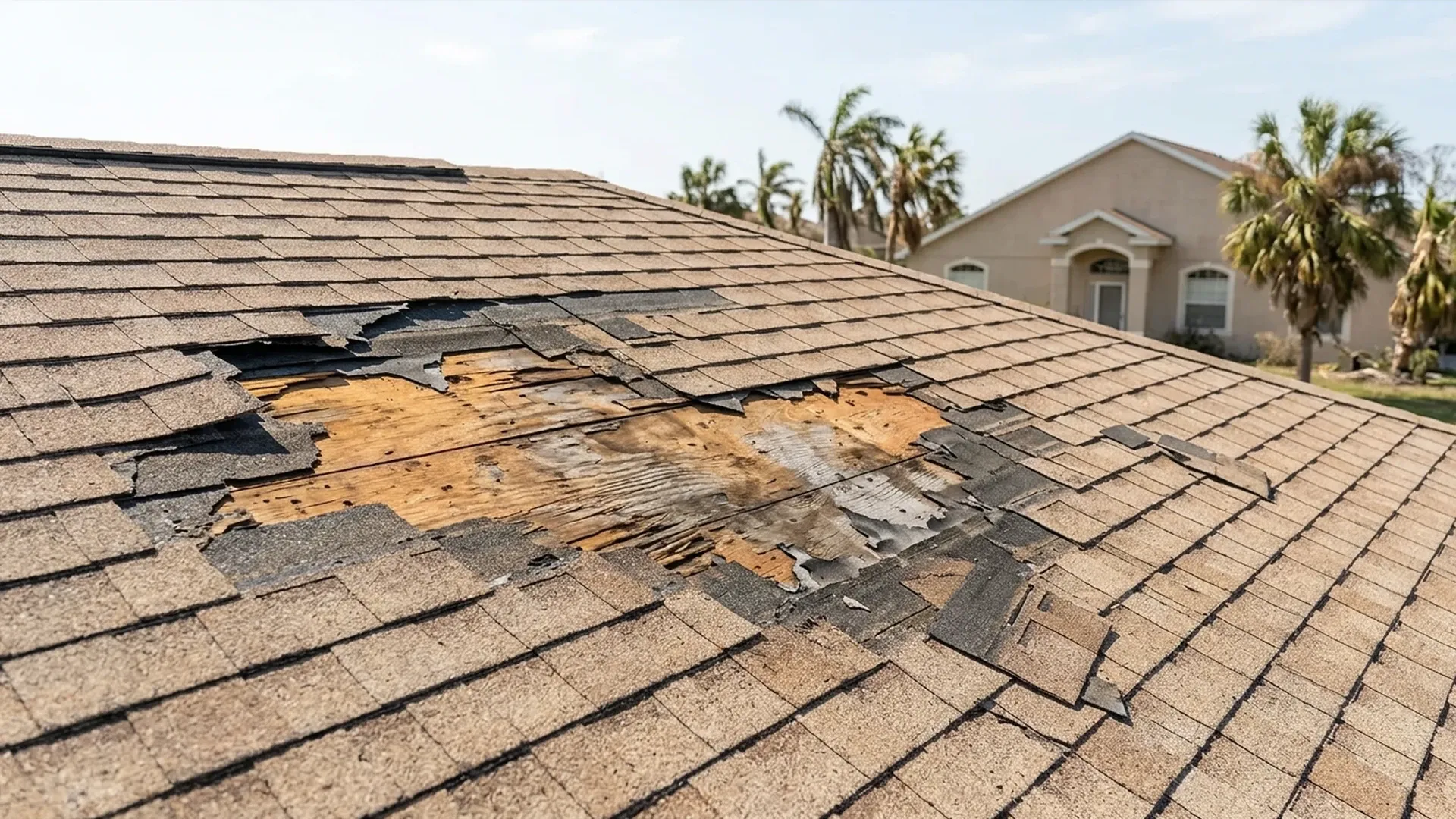
Emergency roof tarping is the fastest way to create a temporary roof cover when wind has torn off shingles, a limb has opened the deck, or a storm has left an active leak. The goal is simple: keep water from reaching the structure and the interior until a roofer can inspect and repair the damage properly.
You likely need a tarp when water is entering the house, when decking is exposed to the sky, or when a large area of shingles is missing and the underlayment is unprotected. A few missing shingles with no leak can often wait for a scheduled inspection.
See our guide to what to do first after storm damage for the broader checklist.
Why DIY Roof Tarp Safety Matters More Than the Tarp
Roof tarp safety starts on the ground, because the biggest risk is the person installing the cover. OSHA's fact sheet on re-roofing notes that even experienced roofers face fall hazards from sudden gusts of wind, loose roofing materials, and surfaces that become slick when wet. It also states that more than one third of fall deaths in residential construction come from roofs.
Storm damage adds problems you cannot see from the ground. OSHA says employers must determine a roof's structural integrity before work begins, because workers have been hurt when roofs collapsed under them. Fallen lines are another danger. FEMA's Ready.gov thunderstorm guidance says to watch for fallen power lines and trees and report them immediately.
Stay off a wet or damaged roof and keep clear of any line on the ground.
What a Professional Roof Tarp Looks Like
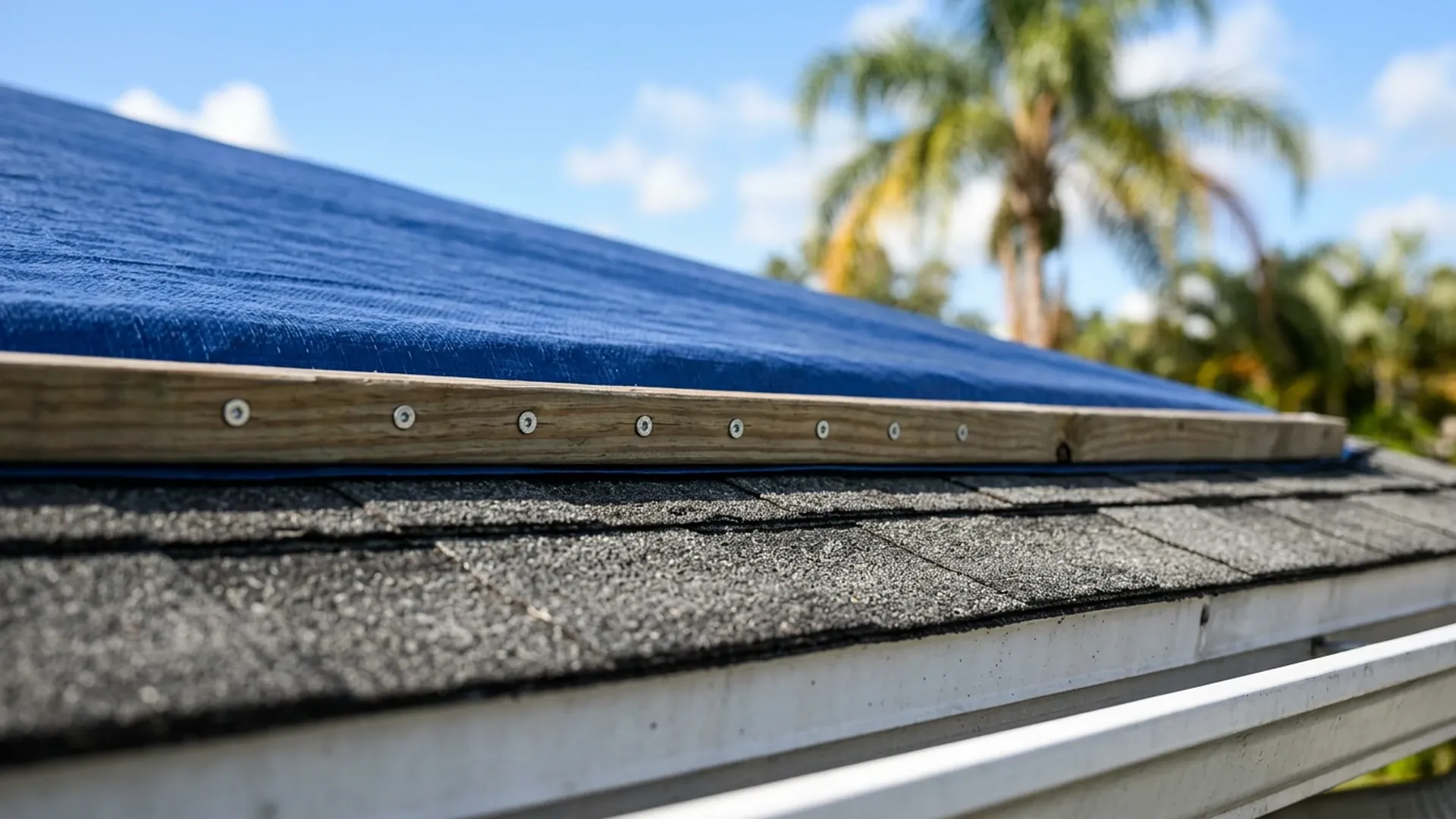
A professional roof tarp is heavy sheeting held down with wood strips and fasteners at points that can carry the load, so wind cannot get under it. FEMA describes the sheeting used in Operation Blue Roof as reinforced plastic secured to the roof with strips of wood fastened by nails or screws. That strip method spreads the holding force across the sheeting instead of tearing at one corner.
Coverage matters as much as fastening. Our temporary roof repair guide explains why a tarp should extend over the ridge, so water cannot run underneath.
A hardware store tarp held down with a few weights is a very different product from professional emergency roof tarping.
What to Do Before the Tarp Goes On: Document Storm Damage
Document storm damage first, from the ground and from inside the house, before anyone covers the evidence. Take wide photos and close photos of missing shingles, exposed decking, interior stains, and debris. Florida's Department of Financial Services advises homeowners to report the claim, make emergency repairs such as placing a tarp on the roof, take photos before and after the repairs, and keep receipts.
Report the loss promptly. Under section 627.70132 of the 2026 Florida Statutes, notice of a property insurance claim must be given within 1 year after the date of loss, and a supplemental claim within 18 months. Your policy may set its own terms, so read it and call your insurer.
Our guide to filing a roof insurance claim in Florida after storm damage covers the claim process. Reimbursement of tarping costs depends on your policy.
What to Avoid: Common Roof Tarp Mistakes
Most roof tarp mistakes come from rushing. Avoid these:
- Climbing up during rain, wind, or lightning, or while the surface is still wet.
- Using a tarp that is too small, so the edges stop short of the damaged area or the ridge.
- Fastening through the field of the shingles with staples or nails, which creates new holes.
- Leaving the cover loose, which lets wind lift it and rain collect underneath.
- Tarping over a roof that is visibly sagging, which may signal structural damage.
- Paying a stranger who knocked on your door right after the storm.
If you are unsure about any of these, stay on the ground and call a licensed roofer. Our guide to temporary fixes for roof leaks lists interior steps that are safer while you wait.
How Long Can an Emergency Roof Tarp Stay Up?
Emergency roof tarping is temporary by design, so plan the permanent repair as soon as the weather and your insurer allow. FEMA has described Operation Blue Roof coverings as designed to last 30 days. That figure is a program benchmark, not a promise for any private tarp, and Florida sun, wind, and repeated storms can shorten the life of any cover.
Treat the tarp as a bridge. A tarp does not fix flashing, replace damaged decking, or restore the shingles. Ask your roofer to inspect the tarped area, check the deck underneath, and give you a written estimate for the permanent repair.
For help deciding between a patch and a bigger project, see our roof repair services in Tampa Bay guide and our roof repair service page.
Operation Blue Roof and Other Free Tarp Options
Operation Blue Roof is a free federal program that covers damaged roofs with fiber-reinforced sheeting after major disasters. The U.S. Army Corps of Engineers runs it for FEMA, and it only opens once a mission is assigned at a state's request. Check the Corps page for current status before you count on it.
The Corps lists eligibility rules. The home must be a primary residence, no more than 50 percent of the roof framing can be damaged, and the roof must allow contractors to nail the sheeting in place. Slate, asbestos, and clay tile roofs cannot be covered. The program is free, so report anyone who tries to charge for it.
When no mission is active, most homeowners will need a private contractor.
How to Choose an Emergency Tarp Roof Service
Choose an emergency tarp roof service the same way you would choose any roofer: license first, scope second, paperwork third. Look up the contractor on the Florida DBPR license search before you sign anything, and confirm the license is active.
Ask what the tarp includes, how it will be fastened, whether the crew will photograph the work for your insurer, and what the written estimate says about the permanent repair. Be careful with anyone who demands full payment up front or refuses to put terms in writing.
Coastal Roofing Group provides emergency tarp roof service as part of its emergency roof repair service. See also our guides to emergency roofing repair near me and staying home during emergency roof repair.
Emergency Roof Tarping FAQ
Can I tarp my own roof after a storm?
You can, but it is risky. Roofs are slick when wet, storm damage can weaken the structure, and downed lines may be nearby. A professional roof tarp also needs proper coverage and fastening. If you cannot work from the ground or the attic, call a licensed roofer instead of climbing up.
Will my insurance pay for emergency roof tarping?
It depends on your policy. Florida's Department of Financial Services tells homeowners to make emergency repairs such as tarping, take photos before and after, and keep receipts. Coverage and reimbursement terms vary, so report the claim promptly and ask your insurer what it will accept.
Is a tarp a permanent fix for storm damage?
No. A tarp only buys time. It does not repair flashing, decking, or shingles, and wind, sun, and rain can wear it down. Schedule an inspection and a permanent repair as soon as conditions allow, and ask for a written estimate that covers the repair.
Should I call my insurer or a roofer first?
Do both quickly, but start with safety. Photograph the damage from the ground, protect the inside of the house, and report the loss. Then call a licensed roofer to cover the damage. Keep photos, receipts, and any written assessment together for your claim file.
Request Emergency Roof Tarping Help in Tampa Bay
If a storm has opened your roof, do not wait for the next rain. Coastal Roofing Group is a licensed and insured, family-owned roofer with three generations of experience.
Call (813) 497-4428 to ask about emergency roof tarping and the permanent repair that should follow, or read about our emergency roof repair service first.
About Adrian Coastal Roofing
Adrian is the CEO of Coastal Roofing, a company specializing in roof installation in Florida, recognized for its quality, reliability, and excellence in residential and commercial projects. With years of experience in the construction industry and Florida roofing, Adrian has built his reputation by delivering durable solutions that withstand the state’s extreme weather. Under his leadership, Coastal Roofing has become a leader in roof installation in Florida, offering modern systems such as TPO, PVC, metal roofing, and other efficient solutions to reduce costs and extend the lifespan of roofs.


