
How to File a Roof Insurance Claim in Florida After Storm Damage
Learn how to file a roof insurance claim in Florida after storm damage, deadlines that apply, and mistakes to avoid. Call (813) 497-4428.

Adrian Coastal Roofing

After a storm moves through Central Florida, a roof insurance claim in Florida may be the difference between a manageable repair and a bill paid entirely out of pocket. A documented roof insurance claim in Florida gives the insurer a clearer starting record. The strongest roof insurance claim in Florida starts with prompt documentation, a clear timeline, and an understanding of the policy and deadlines that apply. For a roof insurance claim in Florida, homeowners should protect the property from further damage, but should not make permanent repairs before the damage is documented and the insurer has had a fair opportunity to inspect it.
Quick answer after a storm
Begin with safety, then take dated interior and exterior photos, record the storm date, and arrange a written inspection. Report a roof insurance claim in Florida promptly, then save the claim number, and use reasonable temporary mitigation while keeping receipts. Review the policy, exclusions, deductible, proof-of-loss requirements, and deadlines before signing anything. Ask about reinspection or supplemental documentation when damage becomes clearer. A roof insurance claim in Florida must follow the policy and current law, not generic online guidance.
How to Document Roof Storm Damage in Florida
How to document roof storm damage in Florida starts when the property is safe to approach. Good records help a roof insurance claim in Florida connect the storm to the roof condition and can make a roof insurance claim in Florida easier for an adjuster to evaluate.
Follow these steps after a storm:
- Photograph the exterior before touching anything. This evidence supports a roof insurance claim in Florida. Take wide photographs of each roof slope and close-ups of missing shingles, dented metal, exposed decking, displaced flashing, fallen branches, and debris impact. Include a reference image, such as a tape measure beside damage, to show scale.
- Record interior damage. For a roof insurance claim in Florida, photograph ceiling stains, drywall bubbling, wet insulation, attic moisture, and damaged contents. Note rooms that smell musty or feel unusually humid. Interior evidence can show the path from roof failure to indoor damage.
- Keep a written timeline. For the roof insurance claim in Florida, record the storm date, when damage and water entry were observed, when the insurer was contacted, and when a contractor inspected the property. A timeline reduces confusion.
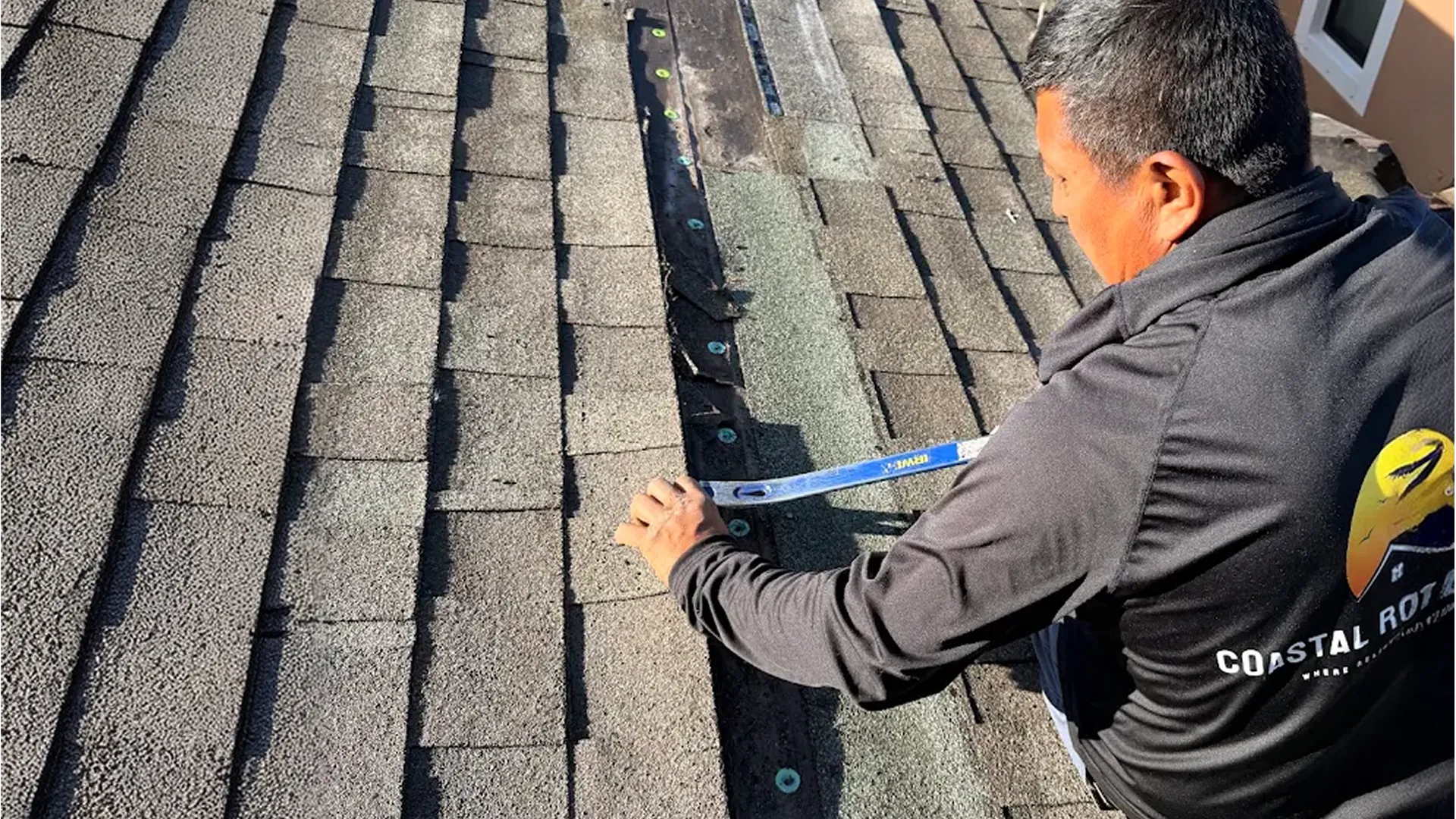
- Arrange a professional inspection quickly. For the roof insurance claim in Florida, a licensed roofing contractor can identify lifted shingle tabs, compromised underlayment, and damaged flashing. Request a dated written assessment and photographs.
- Mitigate additional damage. While documenting the roof insurance claim in Florida, do not leave an active leak open. Reasonable temporary measures, such as tarping, may be required by a policy. Keep receipts and photographs of temporary work.
Avoid climbing onto a wet or unstable roof during a roof insurance claim in Florida. Safety comes first, and a professional can inspect areas that are unsafe for a homeowner. Keep damaged materials when practical, and do not discard them before discussing documentation with the insurer.
Roof Insurance Claim Deadlines in Florida
Deadlines for a roof insurance claim in Florida have changed in recent years. Under current Florida law, homeowners generally have one year from the date of loss to file an initial property insurance claim and up to 18 months to file a supplemental claim or reopen a previously filed claim. Always confirm the deadline in the policy and with current official guidance because law and policy language can change.
The clock generally starts on the date of loss, meaning the storm date, rather than the date the damage is discovered. That is why prompt inspection matters to a roof insurance claim in Florida after a major weather event. A hidden leak discovered months later may still relate to the earlier storm, but the documentation must establish the connection.
Other timing details that can affect a roof insurance claim in Florida include:
- Insurers are required to acknowledge a claim within 14 days.
- Insurers must begin an investigation within 10 days of that acknowledgment.
- Insurers must pay, deny, or partially pay a claim within 60 days of receiving a complete, sworn proof of loss statement.
Common Roof Insurance Claim Mistakes in Florida
Common mistakes in a roof insurance claim in Florida are avoidable when homeowners slow down, read documents, and preserve evidence.
Waiting to report
A small leak can worsen in Florida heat and humidity. Delayed reporting can weaken a roof insurance claim in Florida because it makes the damage harder to connect to a specific storm and may give an insurer grounds to question the timing. Report promptly, even if a contractor is still preparing a complete estimate.
Signing an Assignment of Benefits without understanding it
An Assignment of Benefits, or AOB, transfers certain claim rights to a contractor. Florida has tightened AOB regulations in recent years, but homeowners should read every agreement carefully before signing because an AOB can affect coverage.
Accepting the first estimate without review
An insurer's adjuster works for the insurer. A licensed roofing contractor can review the scope of a roof insurance claim in Florida and identify overlooked items, such as flashing, ventilation, underlayment, or underestimated material quantities. A second opinion does not guarantee coverage for a roof insurance claim in Florida, but it can reveal information that belongs in the claim record.
Making permanent repairs too soon
Temporary mitigation may be necessary for a roof insurance claim in Florida, but full repairs before photographs, inspection, and adjuster review can complicate a roof insurance claim in Florida. Keep damaged materials where safe, take detailed photos, and obtain approval or guidance before permanent replacement when possible.
Not responding to a low settlement
If the proposed payment for a roof insurance claim in Florida does not match the documented damage, request a re-inspection or submit additional evidence for a roof insurance claim in Florida. A homeowner may be able to supplement a roof insurance claim in Florida within the applicable 18-month window. Keep all correspondence and ask for the reason behind any omitted line items.
Frequently Asked Questions
How long do I have to file a roof insurance claim in Florida?
Current law generally allows one year from the date of loss to file an initial property insurance claim, with up to 18 months for a supplemental or reopened claim. Confirm current law and your policy terms before relying on a deadline.
Will insurance cover full replacement after storm damage?
Coverage for a roof insurance claim in Florida depends on the policy, cause, and extent of damage. If a covered storm causes damage severe enough that repair is not practical, an insurer may approve replacement. Age, wear, exclusions, deductible, and policy conditions still matter.
Do I need a contractor inspection before filing?
A contractor inspection is not generally required to report a claim, but a licensed contractor's written assessment can support a roof insurance claim in Florida by documenting damage an adjuster may miss or underestimate. Report promptly and arrange the inspection as soon as it is safe.
What if my claim is denied?
For a roof insurance claim in Florida, request the denial explanation, ask for a re-inspection, and submit additional documentation. A supplemental claim may be available within the applicable window. For complex disputes, homeowners can also contact the Florida Department of Financial Services or seek qualified legal advice.
Conclusion
A successful roof insurance claim in Florida starts with fast, thorough documentation and careful attention to the applicable deadline. Photograph the property, record a timeline, obtain a professional inspection, mitigate further loss, preserve receipts, and read every agreement before signing. Those steps help distinguish storm damage from ordinary wear and give the insurer a clearer record. A well-organized roof insurance claim in Florida also makes it easier to match each repair request to dated evidence.
Coastal Roofing Group helps Central Florida homeowners document storm damage and navigate the insurance claims process from the first inspection through final repair or replacement. If your roof took a hit, call (813) 497-4428 or request a free estimate today. Our crew can inspect and document the roof. We can also help organize a roof insurance claim in Florida around the evidence your insurer requests.
For official guidance on Florida property insurance claims, see the Florida Department of Financial Services.
Related reading:
About Adrian Coastal Roofing
Adrian is the CEO of Coastal Roofing, a company specializing in roof installation in Florida, recognized for its quality, reliability, and excellence in residential and commercial projects. With years of experience in the construction industry and Florida roofing, Adrian has built his reputation by delivering durable solutions that withstand the state’s extreme weather. Under his leadership, Coastal Roofing has become a leader in roof installation in Florida, offering modern systems such as TPO, PVC, metal roofing, and other efficient solutions to reduce costs and extend the lifespan of roofs.


