
TPO vs PVC vs EPDM: Choosing a Commercial Flat Roof
TPO vs PVC vs EPDM for Florida commercial flat roofs: seams, heat, ponding, puncture and wind compared. Call (813) 497-4428 for an inspection.

Adrian Coastal Roofing

TPO vs PVC vs EPDM is the first question many Florida building owners ask when a flat roof needs repair or replacement. All three are single-ply membranes, which the 2023 Florida Building Code defines as a roofing membrane applied in one layer rather than several. None of them wins every comparison. The right choice depends on how your roof drains, who walks on it, what lands on it and how the system is attached.
This guide compares TPO vs PVC vs EPDM on the points that matter on a Tampa Bay commercial roof: seams, heat and UV, ponding water, puncture, wind and warranty. For the wider view of commercial flat roof options, start with our commercial roofing services in Tampa Bay guide and our materials overview for commercial roof installation in Florida. This article goes deeper on the membranes and quotes no prices, because no roof can be priced responsibly without an inspection.
TPO vs PVC vs EPDM: What Each Single-Ply Roofing Membrane Is
TPO vs PVC vs EPDM compares three different materials sold as flat roof membranes, and each has its own ASTM sheet specification. ASTM D6878 covers thermoplastic polyolefin (TPO), a sheet made mostly from ethylene and higher alpha-olefin polymers and reinforced with fabric or scrim. ASTM D4434 covers the PVC roofing membrane sheet, made from poly(vinyl chloride) resin with reinforcing fibers or fabric. ASTM D4637 covers EPDM, a vulcanized rubber sheet that can be non-reinforced, scrim reinforced or fabric-backed. The 2023 Florida Building Code, Building, lists the TPO and EPDM standards in its single-ply table in Chapter 15. All three ASTM documents say wind uplift and in-place design sit outside the sheet specification, so a good sheet is only the start of a good roof.
Seams and Repairs: How Each Membrane Is Joined and Fixed
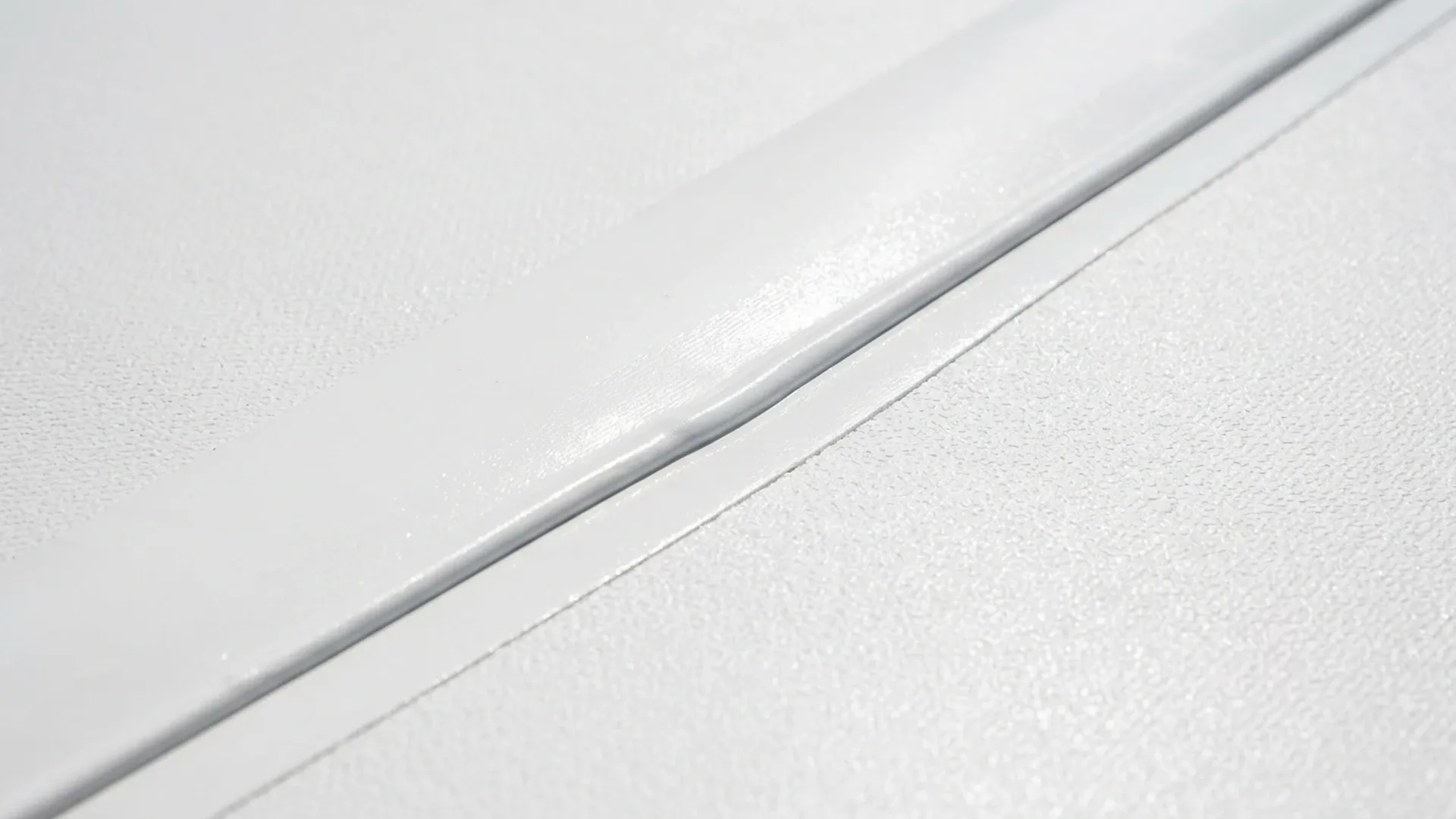
Seams are where separate sheets become one roof, so they deserve attention whichever membrane you choose. ASTM D6878 says TPO sheet must be capable of being heat welded, fused or adhesively bonded to itself to make watertight field splices and repairs. ASTM D4637 and ASTM D6878 both note that field seaming strength is outside what the sheet standard measures, while ASTM D4434 lists seam strength among its sheet tests. Seam quality therefore depends on the installer and the manufacturer's instructions. Ask each bidder how the seams will be made, how they will be inspected after installation and who will repair them later.
TPO vs PVC vs EPDM in Florida Heat and UV
TPO vs PVC vs EPDM looks different once you add Florida sun. The U.S. Environmental Protection Agency explains that high solar reflectance is the most important characteristic of a cool roof, and that high thermal emittance also plays a role in warm, sunny climates. It lists single-ply membranes with light or cool-colored pigments among low-slope cool roof products. So surface and color matter as much as the polymer. For durability, the Florida Building Code requires low-slope roof coverings to show physical integrity over the working life of the roof, based on 2,000 hours of accelerated weathering tests under ASTM G152, G153, G154 or G155. Ask each manufacturer for its weathering data and the solar reflectance of your exact color.
Ponding Water, Drains and Slope
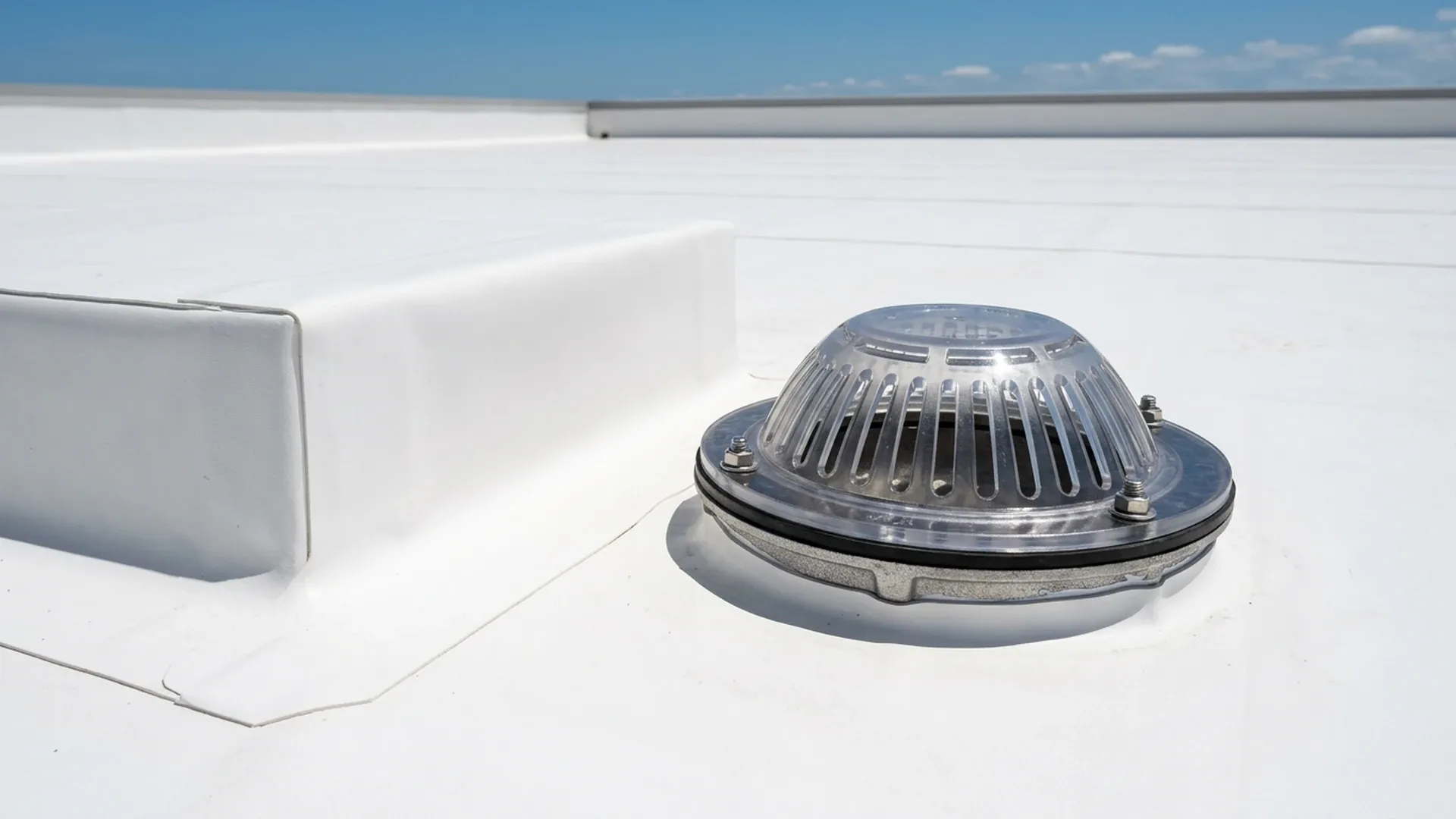
Standing water is a drainage problem before it is a membrane problem. The Florida Building Code sets a minimum design slope of one-quarter unit vertical in 12 units horizontal (2 percent) for drainage on both single-ply and modified bitumen roofs. It also defines positive roof drainage as a condition where enough slope has been provided for the roof to drain within 48 hours of precipitation. Clogged drains, deck deflection and added rooftop equipment can create ponds on a roof that drained well when new. Choose the membrane after you understand the slope and drain layout, and ask whether tapered insulation or additional drains are needed. Keep drains and scuppers clear after every major storm.
Puncture, Foot Traffic and Rooftop Equipment
Rooftop units, service visits and storm debris all load a membrane. The Florida Building Code requires low-slope roof coverings to resist impact damage, using results from ASTM D3746, ASTM D4272 or the foot traffic test in FM 4470. The sheet standards also test puncture: ASTM D4637 and ASTM D4434 each list static and dynamic puncture resistance. In TPO vs EPDM roofing, reinforcement differs: under ASTM, TPO sheet is reinforced with fabric or scrim, while EPDM can be non-reinforced, scrim reinforced or fabric-backed. Ask for the reinforcement type and thickness in the written bid, and plan walkway protection to every piece of equipment that needs service. If exhaust fans discharge grease, oil or other chemicals onto the roof, ask the manufacturer in writing which membranes are rated for that exposure.
Wind, Attachment and Florida Code Requirements
Wind performance comes from the whole assembly, not from the membrane name. The ASTM sheet standards place uplift resistance outside their scope. The Florida Building Code ties performance to how the roof is held down: it defines ballast as stone or pavers used where a roof is not adhered or mechanically attached. The code treats the perimeter in two parts: metal edge systems on low-slope membrane roofs must be designed for wind loads and tested to ANSI/SPRI ES-1 (Section 1504.5), and gutters that secure the membrane edge must resist wind loads under Section 1609 and be tested to SPRI GT-1 (Section 1504.5.1). Perimeters, curbs and penetrations are details worth scrutinizing in any bid. Ask for the product approval or test report behind the assembly's uplift rating, and ask your building department which code edition and wind speed apply to your site.
Modified Bitumen vs TPO: Where It Fits in the Comparison
Modified bitumen is the fourth name on many bid sheets, but it is not a single-ply membrane. Our materials overview describes it as a multi-layer system, and the Florida Building Code treats modified bitumen roofs in their own section of Chapter 15, with the same minimum design slope for drainage as single-ply roofs. Built-up roofs, which the code defines as two or more layers of felt cemented together and surfaced with a cap sheet, mineral aggregate, smooth coating or similar surfacing, are a related layered option. Whether a layered system suits your building depends on the deck, the existing assembly and the foot traffic, which an inspection should document. Coastal Roofing Group installs and repairs modified bitumen and built-up roofing, along with TPO and metal.
Warranty Structure and How to Choose
Warranty wording deserves the same scrutiny as the membrane. Coastal Roofing Group backs its work with a written workmanship warranty and qualifying manufacturer material warranty. Manufacturer coverage differs between products and contractors, so ask every bidder what is covered, what conditions apply, what preventative maintenance records the manufacturer expects and whether the warranty transfers if you sell the building. Then work through this checklist before you choose:
- Drainage: what is the slope, and where do the drains sit?
- Use: how often will technicians or tenants walk the roof?
- Exposure: do exhaust fans discharge grease, oil or chemicals?
- Attachment: which product approval or test report covers the assembly?
- Existing roof: can the new system go over it, or must it come off?
- Paper trail: are the membrane, thickness and seam method in writing?
FAQ: TPO vs PVC vs EPDM Questions
Which is best in Florida: TPO, PVC or EPDM?
There is no universal winner. TPO vs PVC vs EPDM depends on drainage, foot traffic, chemical exposure, color and attachment, and products differ by manufacturer. Compare written specifications for your roof, not generic rankings, and ask each bidder to explain why their system fits your building and how it will be repaired.
Is TPO the same as PVC?
No. They are different polymers with separate ASTM sheet standards: D6878 for TPO and D4434 for PVC. Both are reinforced single-ply sheets, but their formulas and product data differ, so compare each manufacturer's data sheet instead of treating the two as interchangeable options for your building.
Can an EPDM roof be white?
Possibly. According to the EPA, solar reflectance is the key trait of a cool roof, and single-ply membranes with light or cool-colored pigments are among the low-slope cool roof products it lists. Ask the manufacturer which EPDM colors and reflectance data are available for your project, and what the roof warranty says about that surface.
Get a Commercial Flat Roof Assessment in Tampa Bay
If you are weighing TPO vs PVC vs EPDM for your building, start with an inspection and consultation, then an estimate. Coastal Roofing Group is licensed and insured, installs and repairs TPO, modified bitumen, built-up and metal commercial roofs, and backs its work with a written workmanship warranty and qualifying manufacturer material warranty. Ask us which systems we can install or repair for your property before you decide. Call (813) 497-4428, read about our commercial roof repairs and installation service, or book a roof inspection for a documented starting point.
About Adrian Coastal Roofing
Adrian is the CEO of Coastal Roofing, a company specializing in roof installation in Florida, recognized for its quality, reliability, and excellence in residential and commercial projects. With years of experience in the construction industry and Florida roofing, Adrian has built his reputation by delivering durable solutions that withstand the state’s extreme weather. Under his leadership, Coastal Roofing has become a leader in roof installation in Florida, offering modern systems such as TPO, PVC, metal roofing, and other efficient solutions to reduce costs and extend the lifespan of roofs.


