
Seamless vs Sectional Gutters: What Is the Difference?
Seamless vs sectional gutters: how joints, corners and end caps decide where leaks start, and when each type fits. Call (813) 497-4428.

Adrian Coastal Roofing

Seamless vs sectional gutters comes down to where the joints are. A seamless gutter is formed from a coil of aluminum to the full length of each run, so a straight stretch has no seam in the middle. A sectional gutter is assembled from short pieces, commonly 10 feet long, joined along the roofline. Both carry water, but they fail in different places, and those failure points tell you more than a feature list does. This guide compares how each is made, where each one leaks, what thickness and size to ask about, and when sectional still makes sense. It is general information, so your roofline and your written quote decide the details. For the full service picture, see our seamless gutter, soffit and fascia guide for Tampa Bay.
Seamless vs Sectional Gutters: How Is Each One Made?
A seamless gutter is formed from flat, coated aluminum coil into a trough cut to the length of the run, so a straight stretch has no joint in the middle. Ply Gem's Variform guide specification lists gutter coil in 0.027 or 0.032 inch thickness and in 5 or 6 inch sizes. A sectional gutter arrives already formed in short lengths and is joined on the roofline. Amerimax sells a 5 inch by 10 foot aluminum gutter that its retail listing calls a convenient do-it-yourself length, ideal for repairs, replacement and add-ons to an existing 5 inch system. At Coastal Roofing Group, we measure, fabricate and install seamless aluminum gutters in one visit for most homes. The metal can be the same family, but the assembly decides how many joints your roof edge ends up with.
Why Do Sectional Gutter Leaks Start at the Joints?
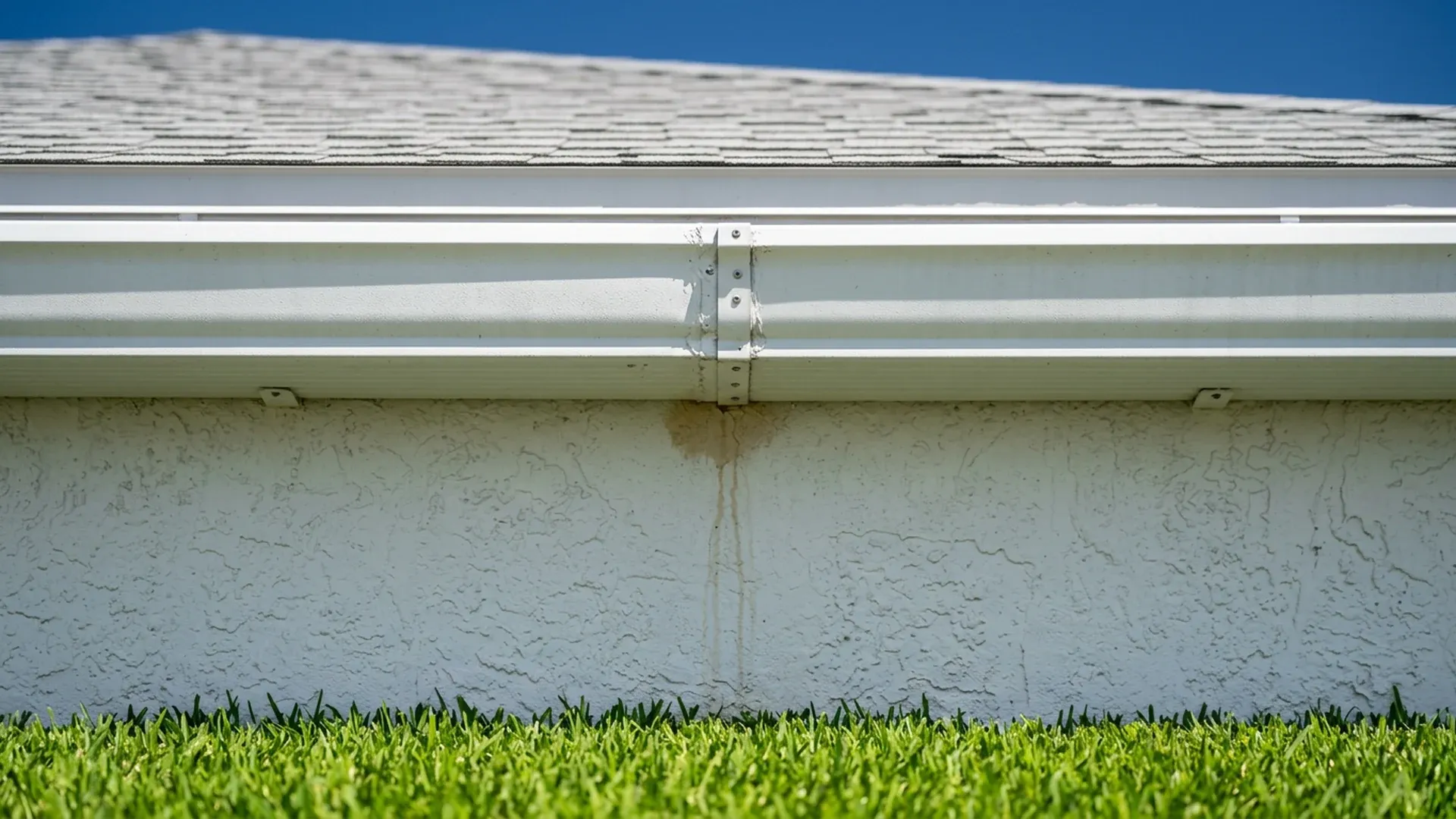
Sectional gutters leak at their joints, because every connection depends on sealant and fasteners holding as the metal moves. Gentek's aluminum rainware installation guide has installers cut a lap, apply two beads of sealant, fit the pieces together with seven pop rivets, then seal the full length of the seam and the pop rivets. The same guide warns that rivets may fracture from expansion and contraction on straight runs over 20 feet where the temperature range is large. The math is simple: a 40 foot run built from 10 foot pieces has three joints along its length, while a seamless run of the same length has none. A drip line or stain below a joint is a common first sign.
Do Seamless Gutter Joints Still Exist at Corners and End Caps?
Yes, at a few places. Seamless describes the straight run, not the whole system. Corners, end caps and downspout outlets are still separate parts that get sealed, so these are the spots to check on a seamless gutter. Ply Gem's specification calls for end caps sealed watertight, eave tubes at downspout locations sealed watertight, and joint sealant where gutter pieces meet. Gentek's guide says to seal the full length of the joints between gutter and mitre, the mitre seams and the rivets. A well-made seamless system leaves far fewer joints than a sectional run, but fewer is not zero. Ask who will seal these points and how, because they are the likeliest leaks on a seamless gutter. Our seamless gutters in Florida guide covers why the straight run matters.
Aluminum Gutter Thickness and Size: What Should You Compare?
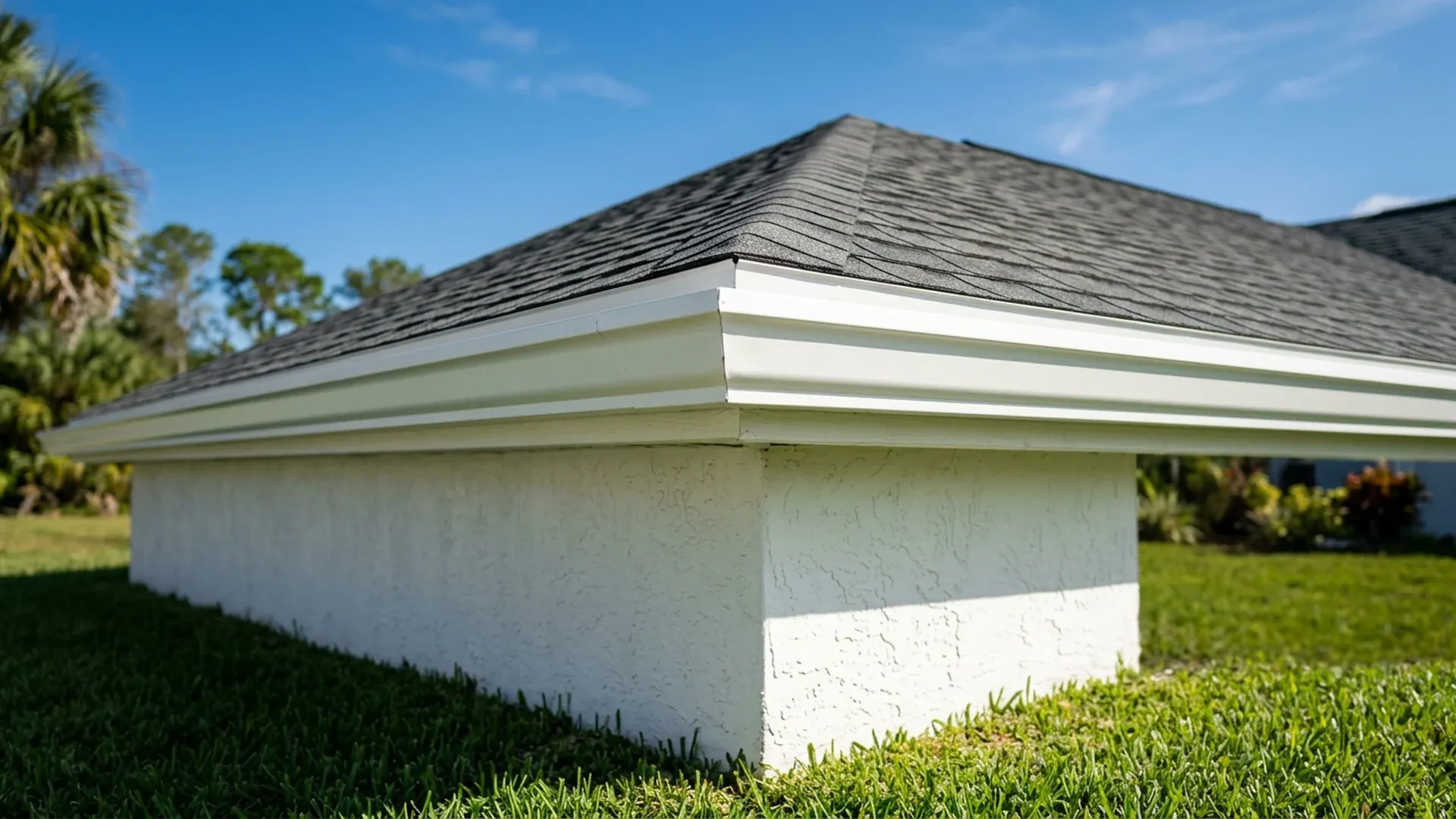
Thickness and size matter as much as joint count when you weigh seamless vs sectional gutters. Ply Gem's Variform specification leaves the choice between 0.027 and 0.032 inch to the specifier and lists 5 and 6 inch sizes, so a quote should name both. A thicker gauge is stiffer and a larger trough holds more water, but neither fixes a bad pitch or a weak hanger. The same specification's sample text sets supports at no more than 36 inches on center, an even slope to the downspouts and expansion joints at no more than 50 foot spacing, while Gentek's guide uses a closer 32 inch limit for its brackets. Hanger spacing, pitch and downspout count belong in the written quote. Match each number to your roof area and your fascia, and do not let the word seamless stand in for those details.
Gutter Repair or Replace: What Can Be Fixed on Each Type?
A repair makes sense when the problem is local, whichever side of the seamless vs sectional gutters choice you are on. On a sectional run, a leaking joint can often be resealed or a damaged piece swapped for a new one, which is why the type suits small fixes. On a seamless run, a leaking corner, outlet or end cap can usually be resealed, and a damaged stretch can be cut out and a new piece joined in, which adds a joint that must be sealed. Replacement is the better call when many joints weep at once, the gutter sags or pulls away, or the fascia behind it is soft. New hangers will not hold in rotted wood, so fix the fascia first. See our soffit and fascia repair guide and the signs you need new gutters.
Sectional Gutters for DIY Repairs: When Do They Still Make Sense?
Sectional gutters still make sense for small, low-stakes jobs. Amerimax positions its 10 foot piece for do-it-yourself repairs, replacements and add-ons to an existing 5 inch system, and that is the honest use case: patching a short run, extending a gutter over a shed or porch, or replacing one damaged piece. The tradeoff is that every connection you add is another sealed joint to watch. For a small patch, a matching sectional piece may be all you need, while Coastal's gutter service focuses on seamless aluminum installation for full rooflines. When the whole roofline needs new gutters, ask for both options in writing and count the joints each one leaves. If you are still deciding whether the house needs gutters at all, read do you need gutters in Florida.
Seamless vs Sectional Gutters Side by Side
Use this summary when you compare quotes for seamless vs sectional gutters:
- Construction: seamless is formed to length from coil, while sectional is joined from short pieces, commonly 10 feet.
- Joints on a straight run: seamless has none in the middle, while sectional has one at every connection.
- Corners, end caps and outlets: both types need sealing here, so inspect these points on either one.
- Installation: seamless is fabricated by an installer with forming equipment, while sectional is sold for do-it-yourself work.
- Repairs: sectional pieces can be swapped, while seamless repairs are usually reseals or spliced sections.
- Best fit: seamless for whole rooflines, sectional for small repairs, add-ons and outbuildings.
Questions to Ask Before You Choose a Gutter
Take these questions to each gutter estimate and get the answers on paper, so the bids line up:
- Is the quote seamless or sectional, and how many joints will the finished roofline have?
- What thickness and size are quoted, and why do they fit my roof?
- How will corners, end caps and downspout outlets be sealed?
- How far apart are the hangers, and what do they screw into?
- Will rotted fascia be repaired before the new gutter goes up?
- What written workmanship warranty covers the gutter work?
- Debris screens are a separate decision, covered in our gutter guards in Florida guide.
Seamless vs Sectional Gutters FAQ
Are seamless gutters completely seamless?
No. Seamless refers to the straight run, which has no joint along its length. Corners, end caps and downspout outlets are still separate parts that need sealing. Ask how each of those points will be sealed and finished, since they are the most likely places for a seamless system to leak over time.
Which is better for Florida homes: seamless vs sectional gutters?
For a whole roofline, seamless usually leaves fewer joints to maintain, which matters when heavy rain returns again and again. Sectional works for small repairs and outbuildings. Your roof size, fascia condition and downspout layout matter more than the label, so compare written quotes rather than choosing by type alone.
Can I mix sectional and seamless gutters on one house?
It is possible, for example when a short sectional piece repairs an existing run, but each added connection is another sealed joint. Sizes and profiles must match, such as a 5 inch piece on a 5 inch system. A gutter installer should confirm the fit before you buy parts.
Plan Your New Gutters With Coastal Roofing Group
Comparing seamless vs sectional gutters for a Tampa Bay home? Coastal Roofing Group can look at your roofline, fascia and downspouts, show you where each option would leak first and quote seamless aluminum gutters. Our team is licensed and insured, and the estimate is free. Call (813) 497-4428 to book it, or read how our seamless gutter installation service works.
About Adrian Coastal Roofing
Adrian is the CEO of Coastal Roofing, a company specializing in roof installation in Florida, recognized for its quality, reliability, and excellence in residential and commercial projects. With years of experience in the construction industry and Florida roofing, Adrian has built his reputation by delivering durable solutions that withstand the state’s extreme weather. Under his leadership, Coastal Roofing has become a leader in roof installation in Florida, offering modern systems such as TPO, PVC, metal roofing, and other efficient solutions to reduce costs and extend the lifespan of roofs.


