
Roof Insurance Claim Florida: Filing Deadline Guide
Roof insurance claim Florida deadlines, coverage, and how to get your roof replaced. Call (813) 497-4428 for a free inspection.

Adrian Coastal Roofing

If your home recently weathered a tropical storm or hurricane season in Central Florida, understanding your legal rights and deadlines is crucial. Many property owners ask how long they have to file a roof insurance claim Florida homeowners can rely on before statutory windows close. Florida weather frequently inflicts subtle structural damage that goes unnoticed for months, but the legal window to submit your paperwork is strictly enforced by state regulators.
Navigating the storm recovery process requires fast action, proper evidence, and certified contractor support. In this article, you'll learn the exact statute of limitations for a roof insurance claim Florida law allows, what your policy actually covers, and the steps that keep a claim from being denied.
What Is the Legal Deadline for a Roof Insurance Claim Florida?
Under current state legislation (Florida Statute § 627.70132), the official timeframe to file an initial roof insurance claim Florida residents must meet is one year (365 days) from the exact date of loss. If you need to submit a supplemental or reopened claim, Florida law allows up to 18 months from the original date of storm damage.
In previous years, property owners had up to three years to report storm impacts. However, recent legal reforms established the strict one-year rule to prevent fraudulent filings. If you discover wind or hail leaks 14 months after a storm, submitting a roof insurance claim Florida carriers will approve is practically impossible because the legal filing deadline has expired.
Does Home Insurance Cover Roof Damage After Storms?
Homeowners often contact our team asking: does home insurance cover roof repairs and replacements after severe weather? In standard policies across the state, homeowners insurance provides coverage for sudden, accidental physical damage caused by covered weather events.
When assessing your property damage, standard covered perils include:
- High-velocity hurricane and tropical storm winds
- Falling trees, branches, and airborne debris
- Severe hail impacts and wind-driven rain
- Lightning strikes and sudden structural impacts
However, standard policies exclude coverage for normal wear, neglect, or roofs that have simply reached the end of their operational lifespan. To successfully file a claim that answers whether does home insurance cover roof damage in your specific case, the damage must stem directly from an identifiable weather event rather than long-term lack of maintenance.
Understanding Your Roofing Insurance Policy Terms and Deductibles
Before submitting paperwork, reviewing your specific roofing insurance terms and hurricane deductible is an essential step. In Florida, property policies typically feature separate deductibles for standard water damage versus named tropical storms.
A hurricane deductible under most roofing insurance policies is usually calculated as a percentage of your total home insured value (often 2% to 5%) rather than a flat dollar amount. When preparing your documentation, calculating your deductible determines whether filing makes sound financial sense.
Additionally, your roofing insurance policy may distinguish between Replacement Cost Value (RCV) and Actual Cash Value (ACV). RCV policies cover the full cost of replacing materials at modern market prices, while ACV policies deduct depreciation based on roof age.
How to Get Insurance to Pay for Roof Replacement Legally
Securing full coverage requires proving that storm impacts cannot be resolved through simple patching alone. Learning how to get insurance to pay for roof replacement starts with systematic, professional evidence.
Here are the critical steps to maximize approval:
- Schedule a professional inspection. Never climb onto a damaged roof yourself. Have a licensed contractor inspect all slopes, valleys, and flashing.
- Obtain detailed photo documentation. Capture clear images of creased shingles, granule loss, lifted tabs, and interior attic leaks.
- Establish the date of loss. Correlate your roof damage with official National Weather Service storm records for your county.
- Submit a comprehensive scope of work. An itemized estimate prepared by an experienced roofer gives the adjuster a clear benchmark.
When you're working through how to get insurance to pay for roof replacement, having your roofing contractor present during the adjuster meeting ensures that all structural damage is noted and included in the claim summary.
When Is Hail Damage Roof Replacement Approved by Insurers?
While hurricanes capture the headlines, hail storms cause widespread destruction across Central Florida. Qualifying for a hail damage roof replacement requires identifying subtle impact marks that compromise shingle integrity.
Hail impacts bruise the fiberglass mat beneath asphalt shingles, causing accelerated granule loss and premature water leaks. When filing for hail damage roof replacement, adjusters look for:
- Circular indentations and black bruising on shingle surfaces
- Dented metal roof flashing, valley pans, and chimney caps
- Damaged gutters, downspouts, and AC condenser fins
- Splatter marks on exterior siding and fences
Because hail damage is difficult to spot from the ground, scheduling a post-storm roof inspection ensures you do not miss the legal deadline for a hail damage roof replacement claim.
Step-by-Step Overview of the Roof Insurance Claim Process
Navigating the roof insurance claim process can feel overwhelming without a clear roadmap. Following an organized sequence avoids costly delays and keeps your claim moving forward smoothly.
- Initial damage assessment: a qualified contractor inspects the roof surface and documents storm evidence.
- Claim submission: you notify your insurance company with policy details and the verified date of loss.
- Adjuster on-site inspection: the insurance adjuster visits your property to inspect the damage firsthand.
- Estimate review and summary: the insurer generates a formal estimate outlining approved line items and initial payments.
- Contractor execution: your roofing contractor secures municipal building permits and completes the new roof installation.
- Final invoicing and depreciation release: the contractor submits proof of completion to release remaining funds.
Mastering the roof insurance claim process ensures that your carrier reimburses all necessary building code upgrades required under Florida law.
Comparing Different Roof Types for Insurance in Central Florida
The architectural style and materials of your home impact your premiums and claim feasibility. Insurance carriers evaluate different roof types for insurance risk in distinct ways:
- Architectural asphalt shingles: the most common residential choice in Florida. High-quality architectural shingles withstand wind speeds up to 130 mph and offer straightforward claim adjustments.
- Standing seam metal roofs: highly preferred by carriers for superior storm durability. Metal systems resist winds over 150 mph and often qualify homeowners for substantial insurance discounts.
- Clay and concrete tile roofs: frequent in Florida master-planned communities. Tile roofs offer exceptional longevity but require specialized labor when repairing flying debris impacts.
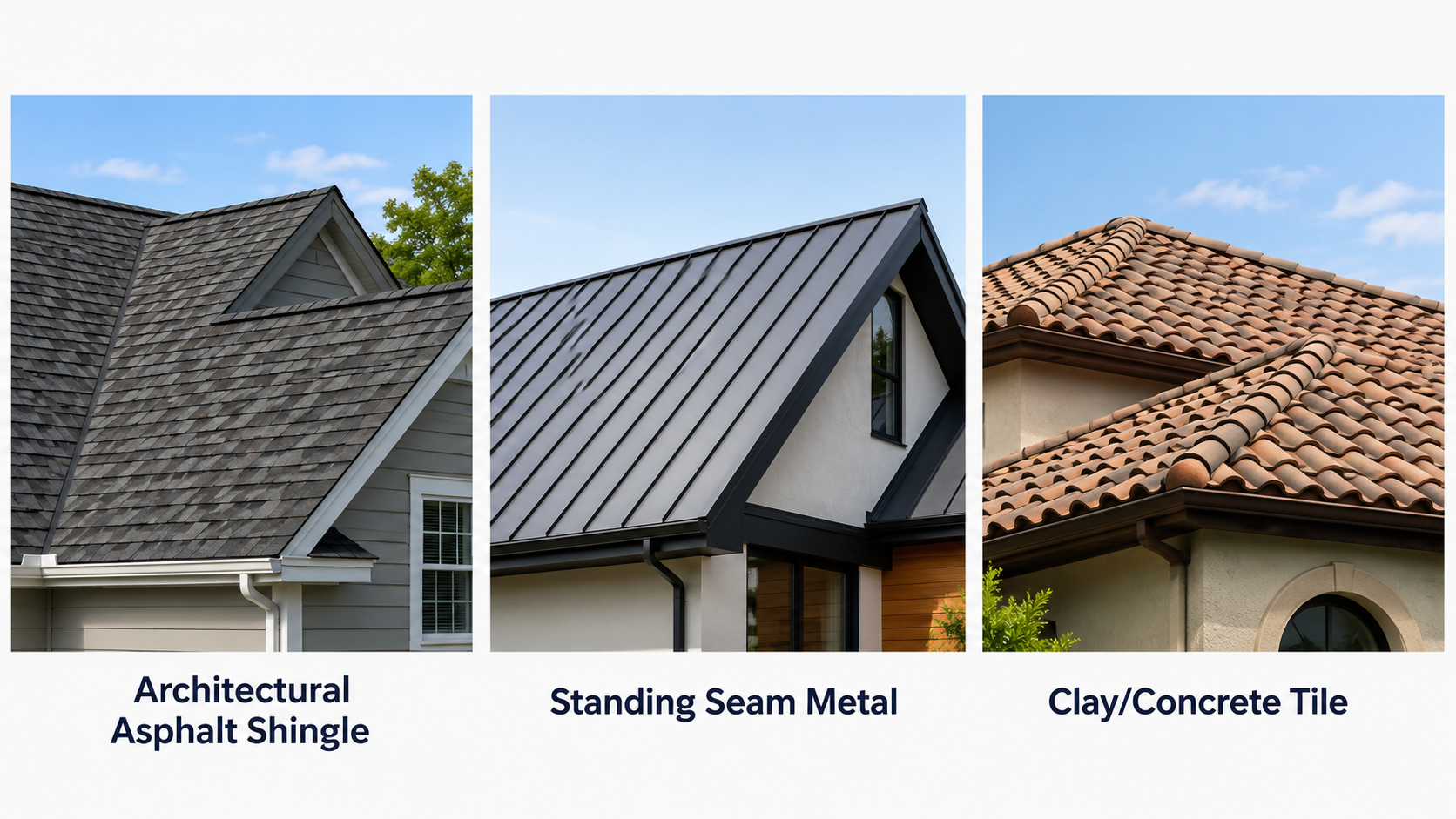
Evaluating different roof types for insurance helps property owners choose replacement materials that lower future insurance premiums.
What Is Included in Roof Replacement Paid by Insurance?
When an insurance carrier approves a complete claim, homeowners naturally ask what is included in roof replacement scopes of work. Under Florida Building Code standards, a full replacement involves comprehensive system components:
- Complete tear-off: removal of all old shingles and deteriorated underlayment down to bare plywood decking.
- Decking re-nailing: securing plywood decking with ring-shank nails to satisfy Florida wind mitigation standards.
- Secondary water barrier: installing high-performance self-adhering underlayment (peel-and-stick) across the entire roof deck.
- New metal flashing and drip edge: replacing all perimeter drip edge, valley metal, chimney flashing, and vent pipe boots.
- Ridge ventilation: installing advanced ridge vents to optimize attic airflow and reduce moisture accumulation.
- Code permitting and inspection: managing county permit filings and municipal building inspections.
Knowing what is included in roof replacement ensures your contractor adheres to manufacturer specifications and local building codes.
Key Mistakes to Avoid During a Roof Insurance Claim Florida
Property owners frequently make avoidable errors that result in reduced payouts or outright claim denials. When managing a roof insurance claim Florida project, keep these rules in mind:
- Do not delay the inspection. Waiting months allows water intrusion to worsen, giving insurers an excuse to claim wear and tear.
- Avoid unlicensed storm chasers. Work only with established, local roofing contractors who maintain Florida licensing and comprehensive liability insurance.
- Do not sign a broad Assignment of Benefits (AOB). Maintain control of your policy rights and collaborate directly with a trusted contractor.
- Keep complete written records. Maintain copies of all emails, adjuster correspondence, photographs, and contractor estimates.
Properly submitting your roof insurance claim Florida documentation protects your property value and restores long-term safety to your home.
Frequently Asked Questions
How long do I have to file a roof insurance claim in Florida?
Florida law gives homeowners one year (365 days) from the date of loss to file an initial roof insurance claim, and up to 18 months for a supplemental or reopened claim.
Does homeowners insurance cover a roof that is simply old?
No. Standard policies cover sudden damage from a specific weather event, such as a hurricane or hailstorm. Roofs that fail due to age, neglect, or normal wear are not covered.
What is the difference between RCV and ACV on a roof insurance policy?
Replacement Cost Value (RCV) pays the full cost of new materials at current market prices, while Actual Cash Value (ACV) subtracts depreciation based on the roof's age before paying out.
Can I still file if I missed the one-year deadline?
Once the statutory window closes, insurers can legally deny the claim regardless of documented damage, which is why scheduling an inspection as soon as possible after a storm matters.
Conclusion
Filing a roof insurance claim Florida deadlines allow is a race against the calendar: one year for an initial claim, 18 months for a supplemental one, and no exceptions once that window closes. Document the damage early, understand what your policy actually covers, and work with a licensed local contractor who can support your claim from inspection through final invoicing.
For over 30 years, Coastal Roofing Group has provided dependable residential and commercial roofing solutions across Central Florida, including Tampa, Temple Terrace, Brandon, and surrounding counties. Whether you need a preventive storm inspection, emergency tarping, or a full roof replacement, our licensed and insured team delivers exceptional craftsmanship backed by written warranties.
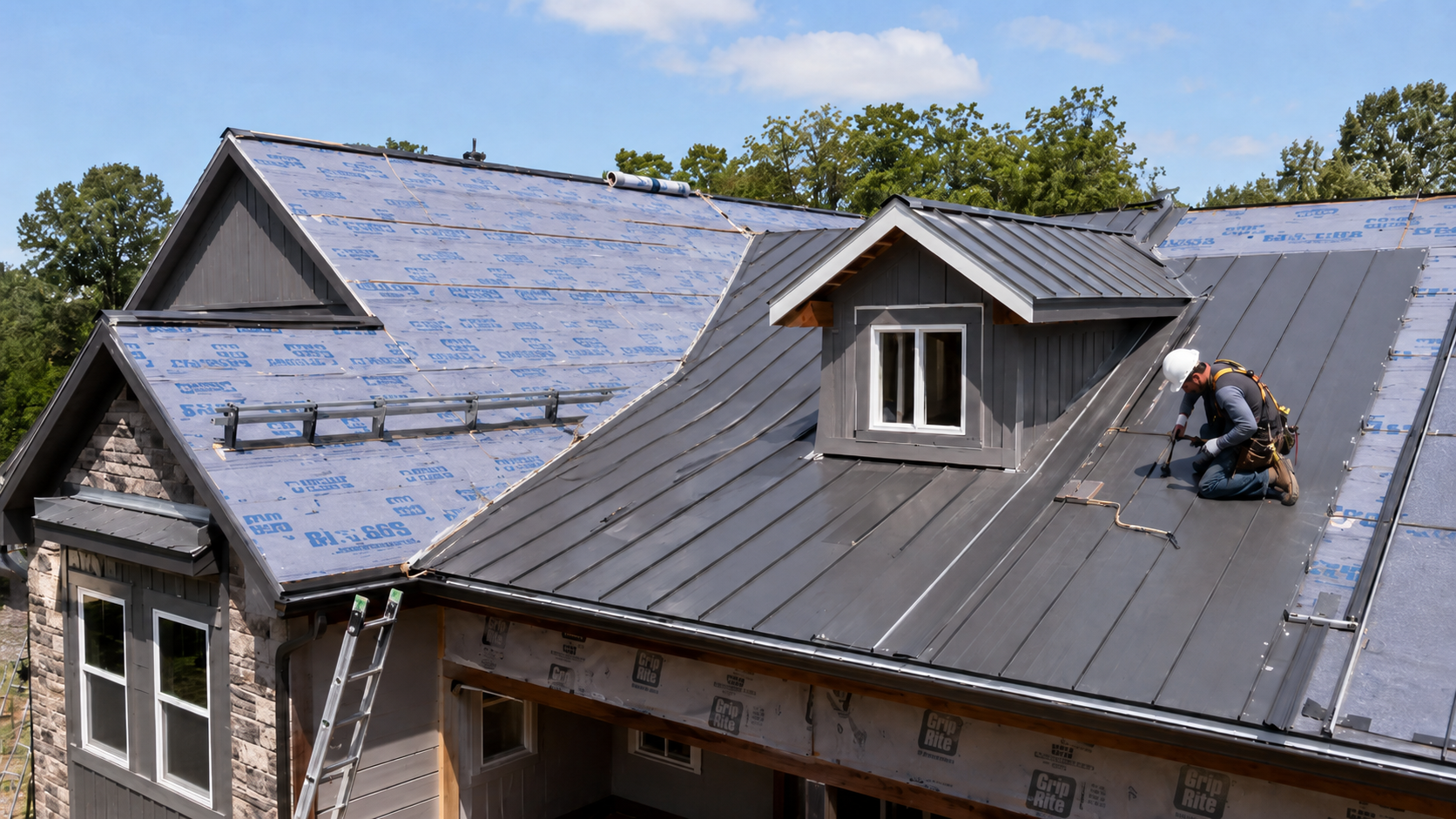
Don't wait until your legal filing window closes. If you need help with a roof insurance claim Florida inspection, contact Coastal Roofing Group today at (813) 497-4428 or visit our website to schedule your free, comprehensive roof inspection.
About Adrian Coastal Roofing
Adrian is the CEO of Coastal Roofing, a company specializing in roof installation in Florida, recognized for its quality, reliability, and excellence in residential and commercial projects. With years of experience in the construction industry and Florida roofing, Adrian has built his reputation by delivering durable solutions that withstand the state’s extreme weather. Under his leadership, Coastal Roofing has become a leader in roof installation in Florida, offering modern systems such as TPO, PVC, metal roofing, and other efficient solutions to reduce costs and extend the lifespan of roofs.


