
Commercial Roof Replacement in Winter Haven, FL: When Repairs Stop Paying Off
Commercial roof replacement in Winter Haven, FL: signs it's time, the step-by-step process and what drives cost. Plan your project. Free roof estimate.

Adrian Coastal Roofing

For a Winter Haven property owner, the roof is both an asset and a liability. It protects inventory, tenants and equipment, and when it fails, the damage spreads fast. If you manage a warehouse, retail center, office or multi-tenant building, there comes a point where another patch is no longer the smart move. This guide covers commercial roof replacement in Winter Haven, FL: how to tell when replacement beats repair, how a professional project runs from survey to warranty, and what actually drives the price. Use it to plan the project before an emergency plans it for you.
Commercial Roof Replacement vs Repair: Signs It's Time
Every commercial roof needs repairs eventually. The real question in the commercial roof replacement vs repair decision is whether repairs are still solving the problem or just postponing it. These are the signs that point toward replacement:
- Repeated leaks in the same areas. If patched sections keep failing, the surrounding membrane or insulation is usually compromised.
- Ponding water. Many manufacturers treat water that remains on the roof well after rain, often cited as 48 hours, as a warning sign. Ponding accelerates membrane wear and can indicate structural or drainage problems.
- Blisters, splits and open seams. These show a membrane that has aged out or lost its bond.
- Wet insulation. Moisture trapped under the membrane cannot be fixed with a surface patch. A moisture survey can map how far it has spread.
- Rising repair invoices. When annual repair spending keeps climbing, compare it to the cost of a new roof spread over the years it will last.
- Age near the end of expected service life. Even a roof that looks fine from the ground may be running out of margin before the next hurricane season. In a Central Florida climate of intense sun, daily summer storms and hurricane-season winds, small membrane failures turn into interior damage quickly. If your building is at the repair stage now, our guides on commercial roof repair in Tampa and preventative roof maintenance explain how to extend a roof's life when replacement is not yet necessary.
Talk to your CPA, too. The way repairs and replacements are treated for accounting and tax purposes can differ, and that can influence timing. This is a question for a tax professional, not a roofer.
The Commercial Roof Replacement Process, Step by Step
A well-run commercial roof replacement process protects your building, your tenants and your schedule. Here is how a professional project typically unfolds:
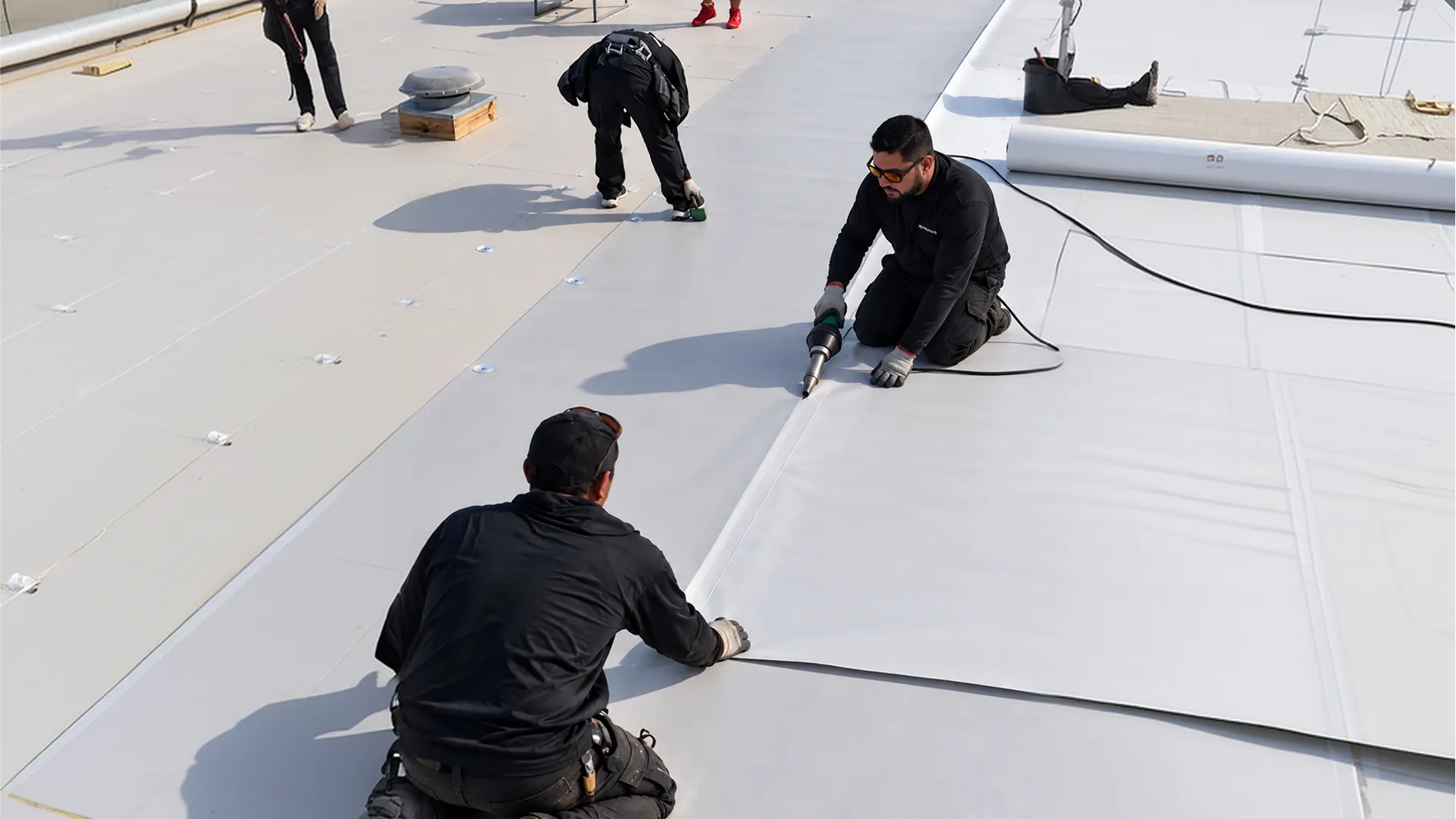
- Roof survey and inspection. The crew walks the roof and documents membrane condition, drainage, flashing, rooftop equipment and penetrations. Where leaks are suspected, a moisture survey helps identify wet insulation.
- Scope decision: tear-off or recover. Some roofs can be recovered with a new system over the old one, while others need full tear-off. Building code, manufacturer requirements and the condition of the deck and insulation decide which is allowed.
- Written proposal. You should receive a detailed specification: system type, thickness, insulation, fastening or adhesion method, flashing details and warranty terms.
- Permit and code review. Florida Building Code requirements, including wind uplift design, apply to commercial roofs. The contractor handles permitting through the building department that covers your address, which may be the City of Winter Haven or Polk County.
- Scheduling around operations and weather. Florida afternoon storms mean crews should only open as much roof as they can dry in each day. Good contractors also plan around tenant hours, deliveries and rooftop equipment.
- Installation. The crew removes the old system if required, repairs the deck and insulation, installs the new membrane and details every penetration and edge.
- Final inspection and closeout. The permit inspection is completed, the site is cleaned, and you receive warranty documents. Ask about phasing on larger buildings. Replacing a roof in sections often lets a business stay open, though noise and debris safety plans should be discussed up front. The National Roofing Contractors Association offers general educational resources on commercial roofing systems if you want independent background.
What Affects Commercial Roof Replacement Cost in Polk County
There is no honest way to quote commercial roof replacement cost without measuring the roof, which is why reputable contractors start with a survey. These are the factors that move the price most:
- Roof area and complexity. Large open warehouse roofs are simpler than roofs with many rooftop units, curbs, skylights and parapet walls.
- System type. Different membranes, metal systems and built-up assemblies carry different material and labor costs. Our post on the best materials for commercial roof installation in Florida compares the options.
- Insulation and deck condition. Wet insulation or damaged decking found during tear-off adds cost.
- Tear-off vs recover. Removing the old roof costs more up front but may be required for performance or code.
- Wind and code requirements. Attachment methods and edge details built for Florida wind loads affect materials and labor.
- Access and safety. Crane or hoist needs, staging areas and fall protection all factor in.
- Phasing and schedule. Working around tenants or overnight work can add cost.
- Warranty length and coverage. Longer manufacturer warranties often require specific assemblies and installers. A smart way to compare bids is to ask each contractor for the base scope plus unit prices for hidden conditions, such as replacing a square foot of wet insulation or a sheet of deck. That way, you know the cost of surprises before they happen.
Frequently Asked Questions
How long does commercial roof replacement take?
It depends on roof size, system type, weather and access. A small retail unit may take a few days, while a large warehouse can take weeks. Your contractor should give you a realistic schedule in the proposal.
Can my business stay open during a commercial roof replacement?
Often yes. Phasing the work, protecting entrances and planning around tenant hours allow many businesses to operate. Discuss noise, debris and safety measures before the project starts.
Do I need a permit for commercial roof replacement in Winter Haven?
Yes. Commercial roof replacement requires a permit and inspections through the building department with jurisdiction over your property. A licensed contractor should manage this as part of the job.
Is it better to repair or replace a commercial roof?
Repair makes sense when problems are isolated and the roof has years of service life left. Replacement makes sense when leaks recur, insulation is wet or repair costs keep rising. A written roof survey gives you the data to decide.
Plan Your Commercial Roof Replacement in Winter Haven, FL
Waiting for a failure is the most expensive way to replace a roof. If you are weighing commercial roof replacement in Winter Haven, FL, start with a documented survey of what you have and what it needs. Coastal Roofing Group is a licensed and insured, third-generation family contractor with a 5.0 Google rating and BBB A accreditation. Its own crew handles residential and commercial work across Polk County, backed by a written warranty on materials and labor.
Call (813) 497-4428 or request a commercial roof estimate to get a clear scope, schedule and price for your property.
About Adrian Coastal Roofing
Adrian is the CEO of Coastal Roofing, a company specializing in roof installation in Florida, recognized for its quality, reliability, and excellence in residential and commercial projects. With years of experience in the construction industry and Florida roofing, Adrian has built his reputation by delivering durable solutions that withstand the state’s extreme weather. Under his leadership, Coastal Roofing has become a leader in roof installation in Florida, offering modern systems such as TPO, PVC, metal roofing, and other efficient solutions to reduce costs and extend the lifespan of roofs.


