
Commercial Roof Maintenance Plan for Property Managers
Build a commercial roof maintenance plan for your Florida property: inspection schedule, drains, penetrations and records. Call (813) 497-4428.

Adrian Coastal Roofing

A commercial roof maintenance plan is a written schedule of inspections, cleaning, small repairs and records that keeps a flat or low-slope roof working between major projects. For a property manager, it turns the roof from a surprise expense into a calendar item with an owner and a file. Florida makes that schedule matter more, because strong sun, summer downpours and hurricane season test drains, seams and flashings every year.
This guide lays out what to schedule, when to inspect, who should walk the roof and which records to keep. It is general guidance, not a promise of results, so adjust it to your roof system and your warranty. For the wider picture of commercial work in our area, see our commercial roofing services in Tampa Bay guide.
What a Commercial Roof Maintenance Plan Should Include
A commercial roof maintenance plan should include four parts: scheduled inspections, routine cleaning, small repairs made on the spot, and a record of everything done. Each part answers a different risk. Inspections find problems early. Cleaning keeps water moving off the roof. Small repairs stop minor defects from turning into leaks. Records show what changed and when.
Start by listing what you manage. Note the roof system type, its approximate age, the number of rooftop units, drains and penetrations, and any past leaks or repairs. A roof with a leak history or heavy equipment traffic needs closer attention than a newer, quiet one. Then give each task a named owner and a due date. A plan with no owner tends to slip, and the roof pays for it.
Commercial Roof Maintenance Plan Schedule: Spring, Fall and After Storms
The National Roofing Contractors Association (NRCA) describes the industry-recommended inspection schedule as twice per year and after severe weather, generally in spring and fall, in its Professional Roofing article for building owners (September 2001). Florida owners can fit that rhythm to the storm calendar. NOAA's National Hurricane Center says the Atlantic hurricane season runs from June 1 to November 30, so a roof maintenance schedule in Florida could place one inspection in May and another soon after the season ends. That timing is our adaptation, not an NRCA rule.
Add a storm trigger. NRCA says a roof inspection after severe weather does not need to be as thorough as a regular inspection. It should focus on perimeter attachments, flashings, rooftop equipment that could have lost parts, and the roof field for damage from debris or hail. Older roofs and roofs with problem histories justify more frequent visits.
Commercial Roof Drain Maintenance: Keep Water Moving
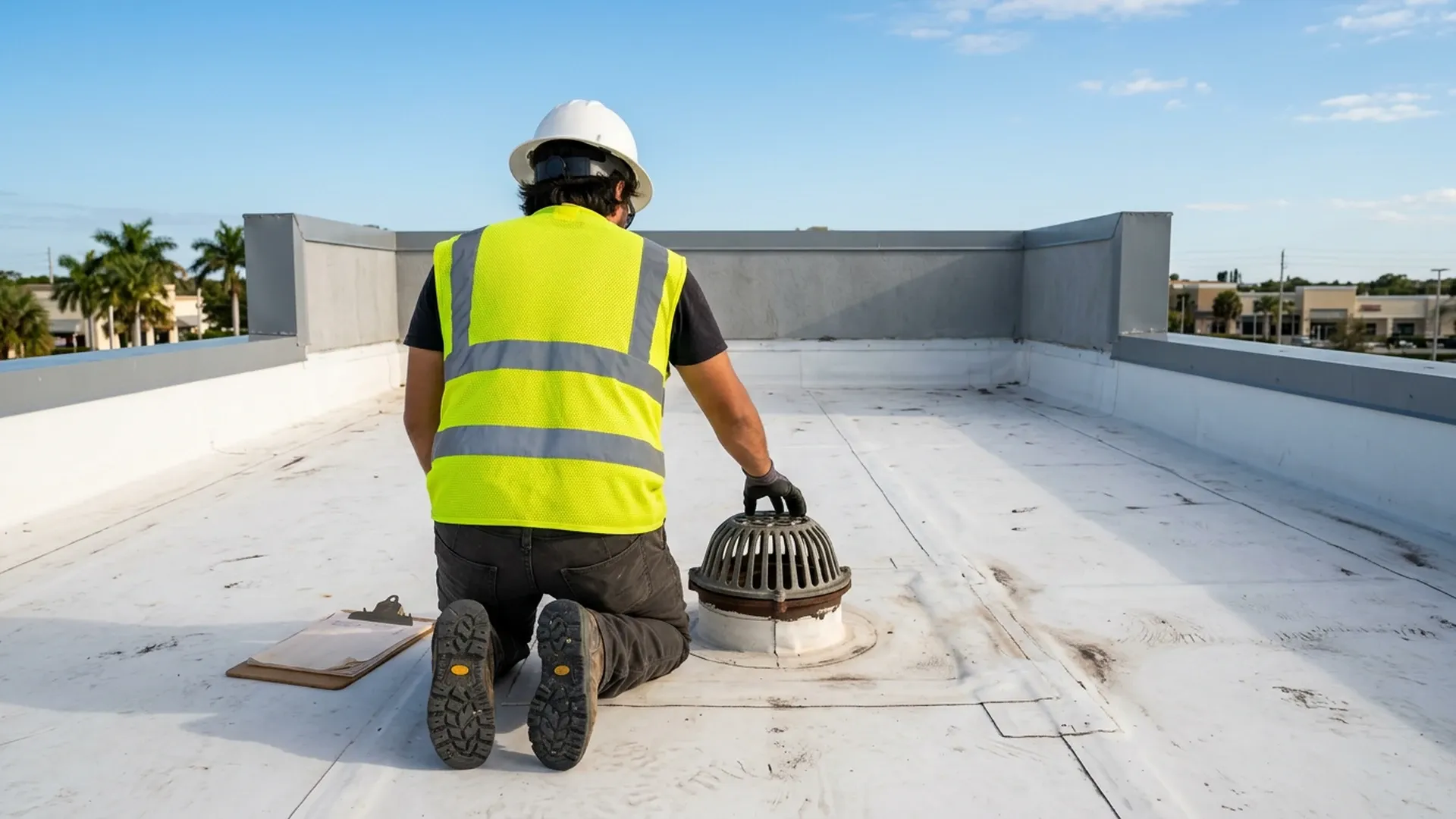
Commercial roof drain maintenance comes first on every visit, because standing water is a quiet cause of flat roof trouble. Clear leaves, grit and debris from drains, strainers, scuppers and downspout heads, and look for ponding that lingers long after rain. NRCA's inspection guidance also says to confirm that roof drains are not clogged and that clamping ring nuts and bolts are tight.
Know where your overflow path is, too. The 2023 Florida Building Code, Building, Section 1503.4.1 calls for secondary (emergency overflow) drains or scuppers where roof drains are required and the roof perimeter extends above the roof in a way that would trap water if the primary drains back up. If your building has them, keep them clear and photograph them. If you cannot tell whether your roof has an overflow path, ask a licensed roofer to point it out.
Commercial Roof Inspection Checklist: Flashings, Penetrations and Equipment
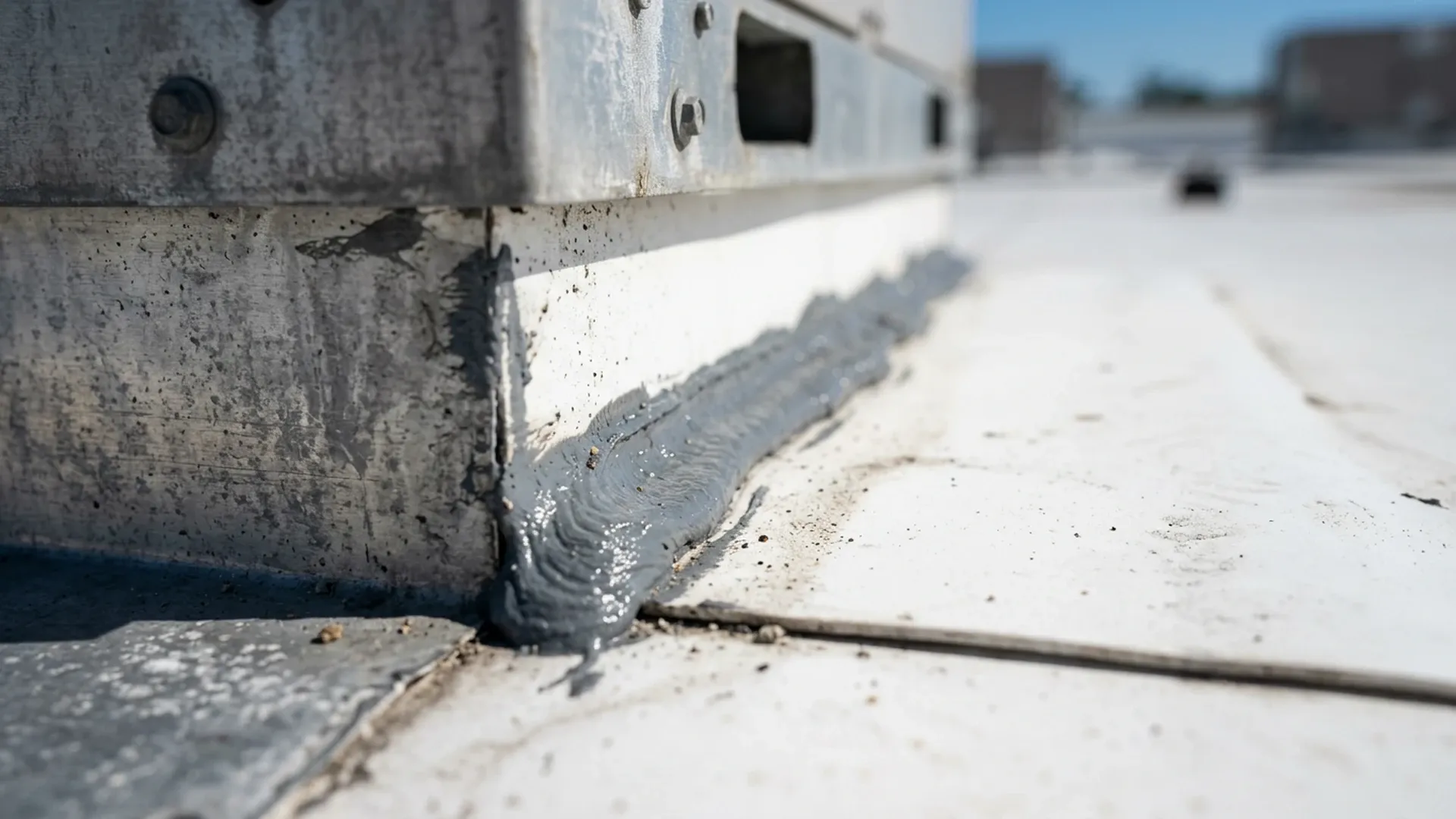
A commercial roof inspection checklist should spend most of its time on details rather than the open field. NRCA's building-owner article says flashings and penetrations are the most critical areas, because a vast majority of leaks and problems occur there. Walk the perimeter first, then the field, and stop at every penetration and rooftop unit. Check these items:
- Wall, parapet and curb flashings for splits, lifted edges and open seams.
- Sealant at pipes, conduits and equipment curbs for cracks and gaps.
- Rooftop unit doors and panels, which should be closed and secured.
- Previous repairs, to confirm they are intact and not leaking.
- The membrane for punctures, blisters, seam separation and worn traffic areas.
Write down the location of every defect and photograph it. A small crack found in May costs far less attention than a leak found in August.
Who Should Walk the Roof: Staff, Vendors and Safety
Decide in writing who may go on the roof, and keep that list short. Begin on the ground and inside the building, as NRCA suggests: look for wall staining, stained ceiling tiles and the underside of the deck before anyone climbs. NRCA also says that if the deck looks badly damaged, nobody should walk the roof until it is known to be safe.
Fall protection is a legal matter, not only good practice. OSHA's 29 CFR 1910.28(b)(1)(i) requires employers to protect each employee on a walking-working surface with an unprotected side or edge 4 feet or more above a lower level. Whether it applies to your staff or a vendor's crew depends on the job, so ask every vendor how it handles roof access. Log each visit, including HVAC and other trades, because work on rooftop equipment can damage the membrane unnoticed.
Roof Maintenance Records That Support Your Warranty
Roof maintenance records are the part of a plan most managers skip, and the part that matters when a question arises. Keep a dated file for each roof as part of your commercial roof maintenance plan: inspection reports, photos, repair invoices, a roof plan that marks drains, units and penetrations, and any manufacturer warranty documents. NRCA notes that unmarked photographs can be difficult to interpret later, so label each photo with its location and date.
Warranty terms vary by manufacturer and roof system, so read yours for maintenance and notice requirements, and ask the manufacturer or installer if anything is unclear. Records do not guarantee coverage. They do give you facts, which helps if a warranty or insurance question comes up. Check your own policy too, because coverage rules differ by carrier.
When Maintenance Findings Point to Repair or Replacement
A commercial roof maintenance plan should end with a decision rule. Small, isolated defects belong in the repair column. Repeated leaks in different areas, wet insulation, widespread membrane splitting or repair bills that keep climbing suggest it is time to look at the bigger picture. Our guide to commercial roof repair or replace decisions walks through that choice, and our article for Tampa business owners on commercial roof repair explains what a repair project involves.
Bring your records to that conversation. A dated history of inspections, ponding and repairs lets a roofer see patterns quickly, and it keeps the discussion about evidence instead of guesses. Permit rules for repairs and reroofing vary by city and county, so confirm local requirements before work starts.
Commercial Roof Maintenance Plan FAQ
How many times a year should a commercial roof be checked?
NRCA describes the industry-recommended schedule as twice per year, generally in spring and fall, plus after severe weather. Older roofs or roofs with repair histories may justify more frequent checks. Your warranty or insurer may set its own requirements, so read those documents as well.
Who is responsible for commercial roof maintenance?
It depends on your lease and ownership structure. Many leases assign roof duties to the landlord, the tenant or both, so check yours. Whoever holds the duty should name an owner for the schedule, keep the records and use qualified, licensed roofers for inspections and repairs.
What affects the cost of a commercial roof maintenance plan?
Roof size, system type, access, the number of drains and penetrations, roof age, repair history and inspection frequency all matter. A roofer needs to see the building to scope the work, so pricing comes from the roof itself rather than a flat number.
Request a Commercial Roof Maintenance Plan Review
If you manage commercial properties in Tampa Bay and want a second set of eyes on your roof schedule, Coastal Roofing Group can help. We are licensed and insured, and our work comes with a written workmanship warranty and qualifying manufacturer material warranty. Call (813) 497-4428 to talk about preventative maintenance or commercial roof repairs and installation for your building.
About Adrian Coastal Roofing
Adrian is the CEO of Coastal Roofing, a company specializing in roof installation in Florida, recognized for its quality, reliability, and excellence in residential and commercial projects. With years of experience in the construction industry and Florida roofing, Adrian has built his reputation by delivering durable solutions that withstand the state’s extreme weather. Under his leadership, Coastal Roofing has become a leader in roof installation in Florida, offering modern systems such as TPO, PVC, metal roofing, and other efficient solutions to reduce costs and extend the lifespan of roofs.


