
Ceiling Water Stains: Causes, Risks & What to Do Next
Tampa Bay homeowners: ceiling water stains could signal a hidden roof leak. Learn the causes and when to call a professional.

Adrian Coastal Roofing

You walk into your living room one morning and notice it: a yellowish-brown ring spreading across the ceiling, where there was nothing the day before. There was no storm last night. There are no visible pipes overhead. So why do ceiling water stains appear out of nowhere?
This is one of the most common questions Tampa Bay homeowners ask, and it almost always catches people off guard. Ceiling water stains may seem like a minor cosmetic issue at first glance, just a discoloration you will deal with someday. But in most cases, by the time the stain appears, moisture has already been sitting in the roof structure for days, weeks, or even longer.
In this article, you will learn what causes ceiling water stains even without recent rain, how to identify the source, and exactly when to call a roofing professional.
Roof Leak Detection Signs: Where Ceiling Stains Actually Come From
The first instinct when you spot a ceiling stain is to assume you have a roof leak, and sometimes that is exactly right. But ceiling water stains can have several different origins, and knowing which one you are dealing with changes everything about how you respond.
The most common causes include:
- Active roof leaks: Damaged or missing shingles, cracked flashing around chimneys or vents, or deteriorated sealant can allow water to enter the roof structure. Roof leak detection is tricky because water travels along beams before dripping down, meaning the stain often appears far from the actual entry point.
- Old, slow leaks: These are the sneaky ones. Your roof may have had a minor breach for months. Ceiling water stains appear only after moisture has built up enough in the insulation or decking, and by then, the damage is usually more serious than the stain suggests.
- Condensation and HVAC issues: Poorly insulated attic spaces, improperly vented HVAC systems, or high interior humidity can cause moisture to build up and drip without any actual roof penetration.
- Plumbing: A slow drip from a joint or pipe running through your ceiling or attic can create stains that look identical to a roof leak.
For roof leak detection, location matters. Stains near light fixtures, vents, or the center of the room are more likely to be roof-related. Stains closer to walls may point to plumbing or condensation issues instead.
Condensation vs Roof Leak: How to Tell the Difference
One of the trickiest calls a homeowner has to make is distinguishing condensation from a roof leak, and getting it wrong can lead to either unnecessary panic or a missed problem that worsens every week.
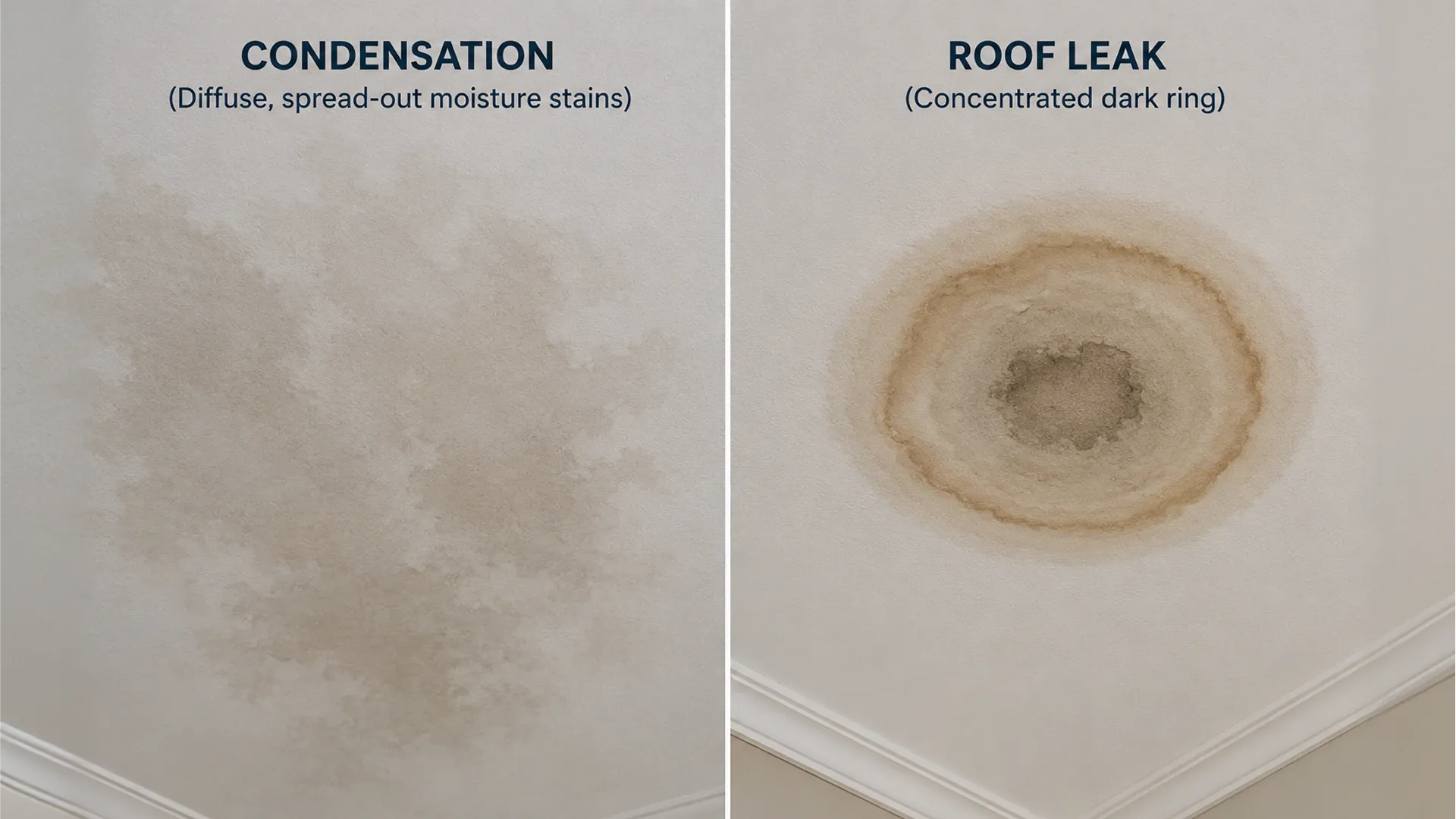
Signs it is condensation:
- Stains appear during humid months or after extended periods of high indoor humidity
- Ceiling water stains spread across a wide, diffuse area rather than forming a single concentrated ring
- Your roof is relatively new and in good condition
- Your attic has insufficient ventilation or insulation
- The stains do not seem to grow noticeably after heavy rainfall
Signs it is a roof leak:
- Ceiling water stains appear or expand after rain events
- You see a single concentrated ring or a spreading dark patch
- There is visible daylight through your attic boards when you inspect from inside
- Shingles above the affected area are curled, cracked, or missing
- There is a musty odor near the stained area, a sign of early mold growth
When trying to diagnose the issue on your own, it is easy to reach the wrong conclusion. A professional roof inspection is the fastest and most reliable way to know which problem you are dealing with and what it will cost to fix.
Water Damage Signs on Ceiling: What the Stain Is Telling You
Not all ceiling water stains are created equal. The appearance of the stain itself carries important clues about what is happening above your head.
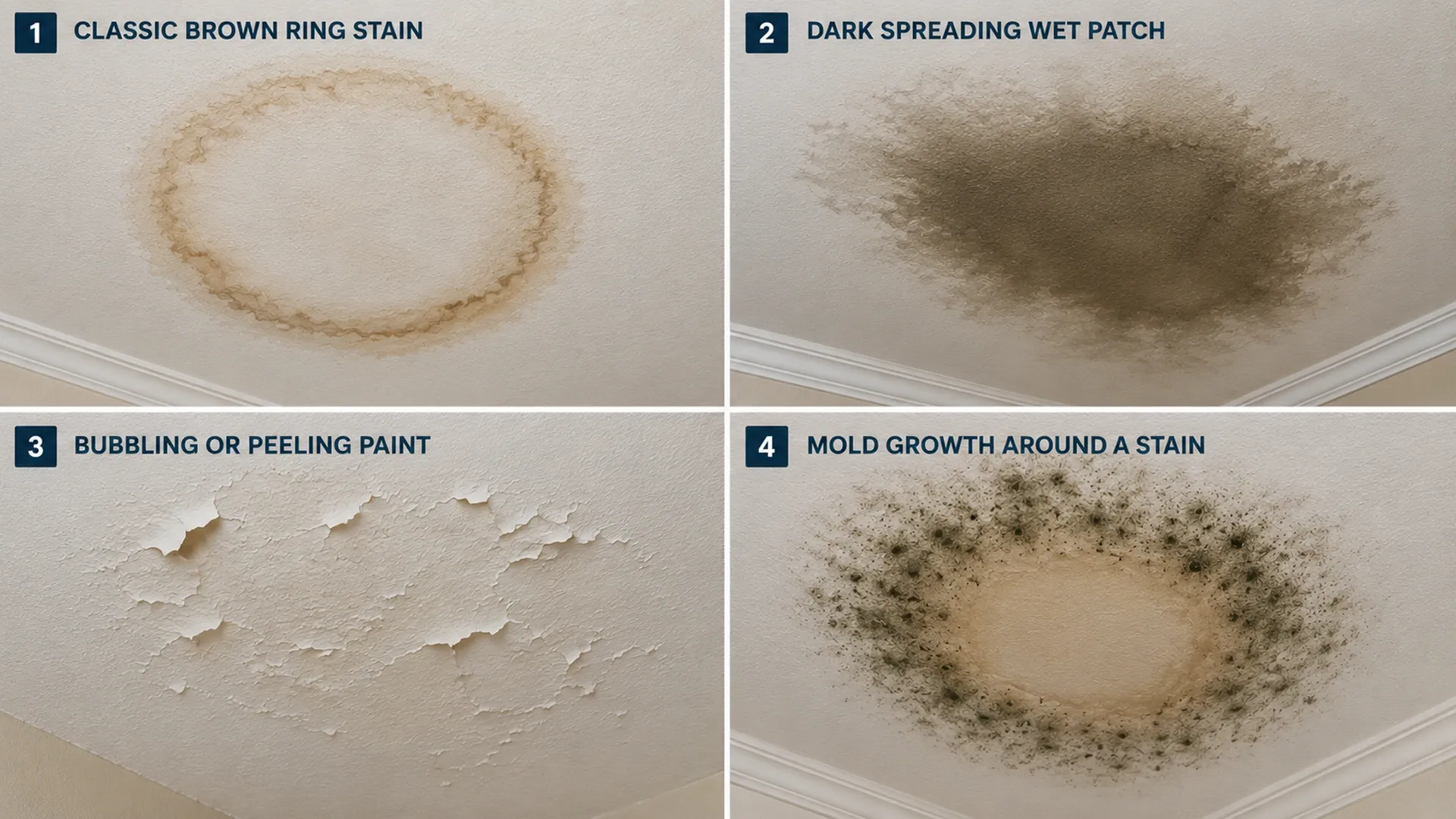
Brown or yellowish ring stains are the classic ceiling water stains most homeowners recognize. The ring forms as moisture evaporates and leaves behind minerals and debris. If you see a ring with a still-damp center, the source may still be active.
Dark, spreading patches suggest a faster-moving or larger intrusion. The ceiling material is absorbing more moisture than it can evaporate, and drywall weakens quickly under sustained moisture. Ceiling collapse becomes a real risk if it keeps growing.
Sagging or bubbling paint means water has gotten between the drywall and the paint layer. The surface is already structurally compromised. Do not press on it, as the area may be holding water and collapse unexpectedly.
Faint discoloration without a defined ring could be an older, dried stain from a past leak that was repaired, or early-stage condensation. Either way, it is worth investigating before it progresses.
Mold spots around the stain are among the most serious warning signs. If black, green, or fuzzy growth has started near your ceiling water stains, moisture has been present long enough to support mold, which spreads rapidly and creates health risks if left untreated.
Regardless of which category your ceiling water stains fall into, the answer is the same: find and fix the source before repainting. Covering the stain without resolving what caused it is how a $400 repair turns into a $6,000 structural problem.
Frequently Asked Questions About Ceiling Water Stains
Can ceiling water stains go away on their own?
The stain itself will not disappear without repainting, but more importantly, the underlying cause will not resolve on its own. Even if the discoloration seems to stop growing, there may still be active moisture in your insulation or roof structure causing ongoing damage below the surface. Always identify and fix the source before any cosmetic repairs.
How long can a roof leak go unnoticed before it causes serious damage?
A slow roof leak can go undetected for six months to over a year before visible ceiling water stains appear. By that point, structural decking may already be rotting and mold may have taken hold in your insulation or attic. Early inspections are far less expensive than late repairs.
My ceiling has a water stain but it has not rained in weeks. Should I still be worried?
Yes. Moisture can remain trapped in your insulation or roof layers for weeks after the event that caused it. Ceiling water stains may appear or expand long after the original leak. Getting a roof inspection is the right move regardless of how long ago it rained.
Conclusion
Ceiling water stains are your home's way of signaling that something is wrong overhead. Whether it turns out to be a roof leak, a condensation issue, or a plumbing problem, the answer you need is a professional assessment, not a layer of paint to cover the problem up.
At Coastal Roofing Group, we inspect and diagnose ceiling water stains and their sources across Tampa Bay regularly. Most homeowners are relieved to learn exactly what is going on, and often surprised it did not cost nearly as much to fix as they feared.
Not sure if it is an emergency? Schedule a free inspection and get a clear answer today: (813) 497-4428!
About Adrian Coastal Roofing
Adrian is the CEO of Coastal Roofing, a company specializing in roof installation in Florida, recognized for its quality, reliability, and excellence in residential and commercial projects. With years of experience in the construction industry and Florida roofing, Adrian has built his reputation by delivering durable solutions that withstand the state’s extreme weather. Under his leadership, Coastal Roofing has become a leader in roof installation in Florida, offering modern systems such as TPO, PVC, metal roofing, and other efficient solutions to reduce costs and extend the lifespan of roofs.


